

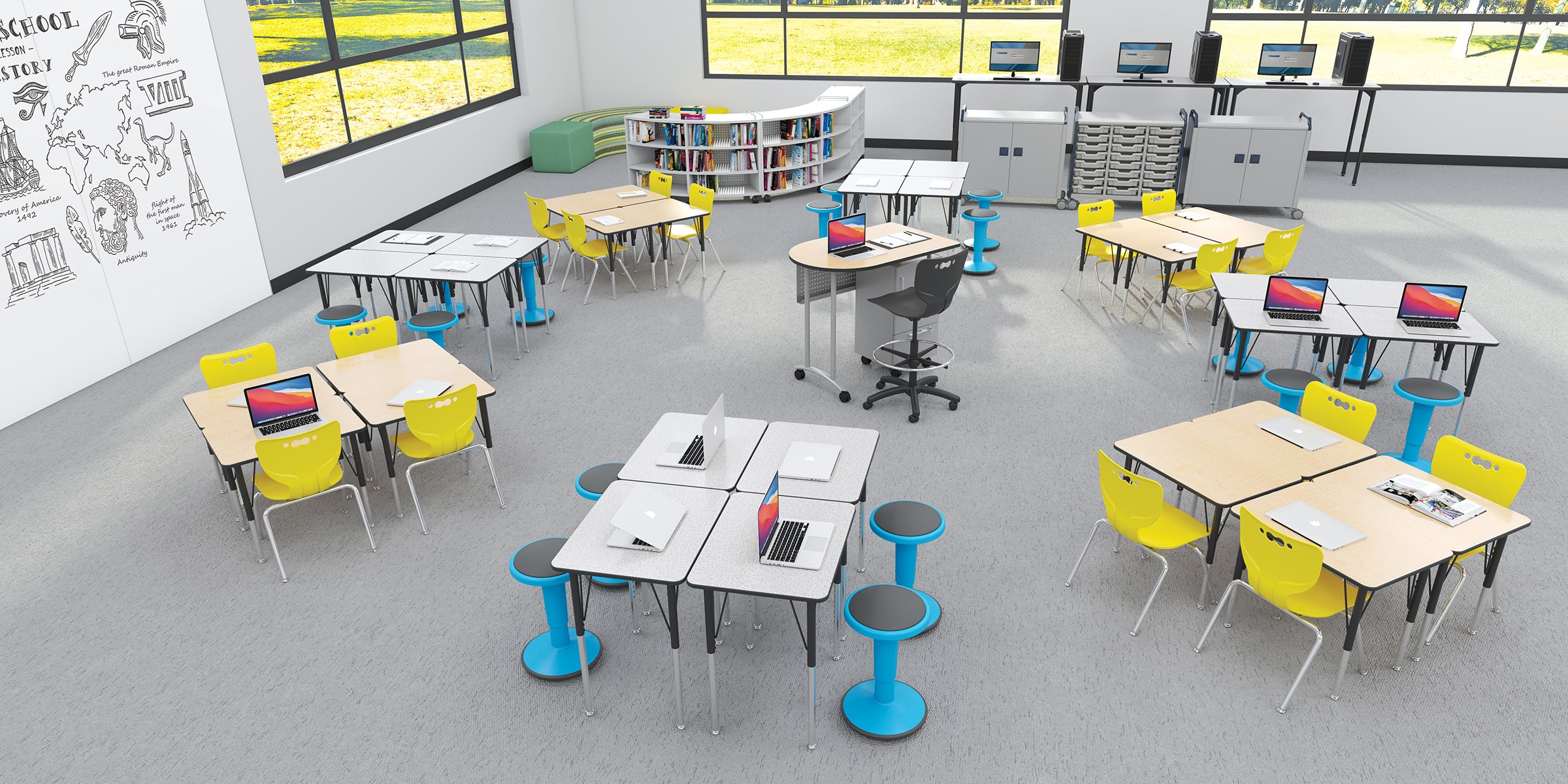
The research on flexible seating in classrooms has grown significantly over the last decade, and the conclusion is remarkably consistent: when students have agency over where and how they sit, academic engagement improves, disruptive behavior decreases, and both focus and collaboration increase.
The most cited study in the field — conducted by Edutopia and published as part of their flexible classrooms research — found that students in classrooms with flexible seating showed improved grades, higher participation rates, and more in-depth peer conversations compared to students in fixed-seating environments. Teachers in the study reported that students seemed to have an instinctive sense of which position helped them work best — and their academic outcomes improved when they were allowed to act on that instinct.
The mechanism behind these results involves more than comfort. According to research published in the Journal of Physical Activity and Health, movement — even micromovement like the rocking of a wobble stool or the subtle balance adjustments required by active seating — increases blood flow to the prefrontal cortex, the brain region responsible for attention, planning, and impulse control. Flexible seating isn't just about being comfortable. It's about giving the brain the physical input it needs to sustain cognitive engagement.
The American Academy of Pediatrics recommends that children engage in at least 60 minutes of physical activity daily, and notes that opportunities for movement integrated into the school day — including through classroom seating — contribute meaningfully to meeting that threshold while supporting academic performance. Flexible seating is one of the most practical ways schools can build movement into learning without disrupting instruction.
Here are eight ways to bring flexible seating into your classroom, with grade-level guidance and the specific benefits each option delivers.
1. Soft lounge seating: for comfort, independent work, and decompression
BEST FOR: Middle School · High school
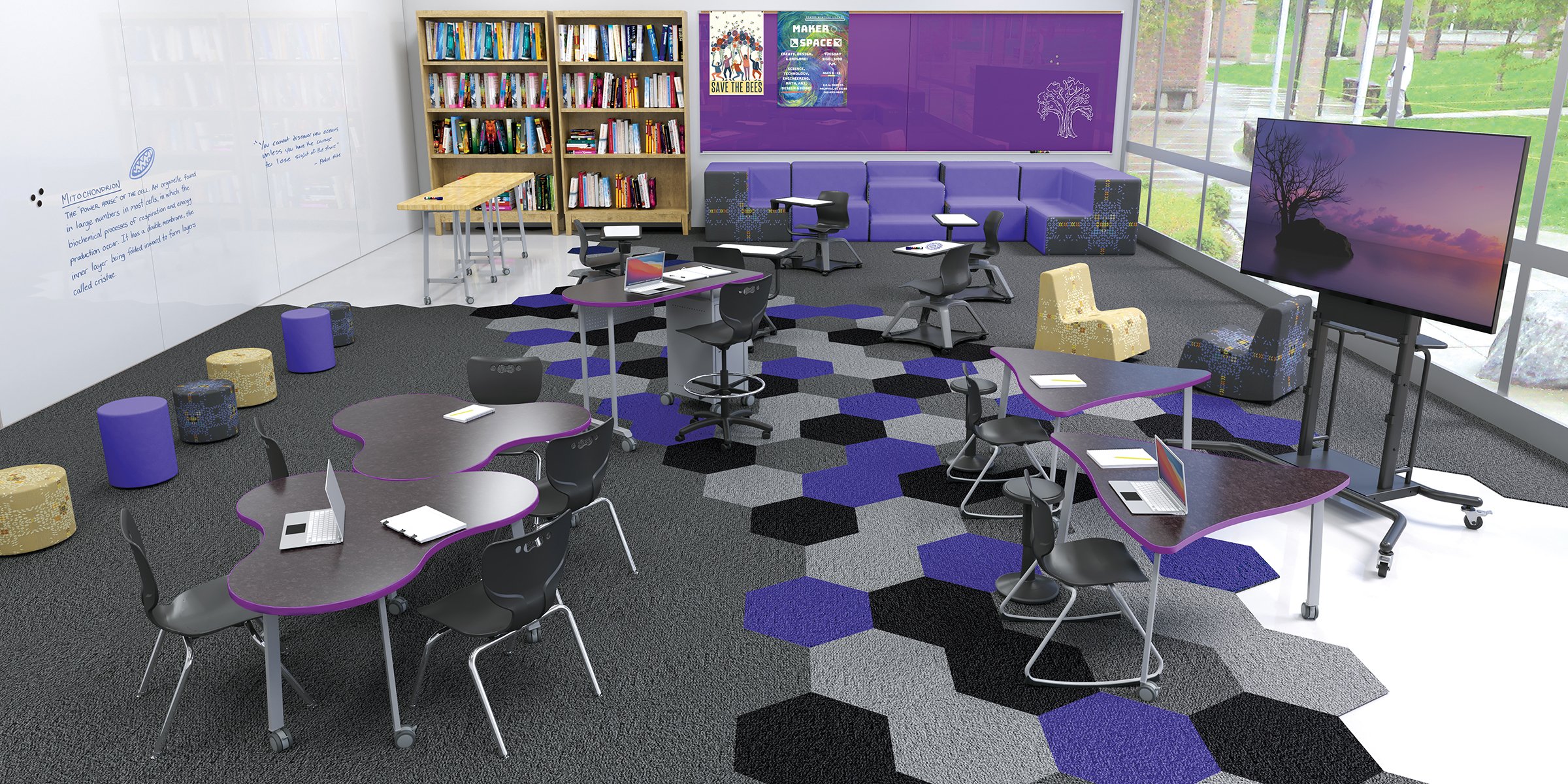
Soft lounge seating — bean bag chairs, floor cushions, and low-profile foam seating like Beanies by MooreCo — serves a distinct function in a flexible classroom: it creates a zone that feels categorically different from work surfaces. When students choose soft seating, they're typically engaged in independent reading, reflective writing, or low-stimulation processing — activities that benefit from a relaxed physical posture.
For middle and high school students, soft seating also serves an emotional regulation function: a student who needs to decompress or reset can do so without leaving the classroom. Having a designated soft seating zone signals that the classroom has space for different cognitive modes, not just active production.
Implementation notes:
- Position soft seating away from high-traffic areas and away from the primary display surface — it's best suited to independent or small-group quiet work, not whole-class instruction
- Limit quantity: 4–6 pieces in a standard classroom is sufficient; too much soft seating shifts the room's energy in a direction that makes whole-class transitions harder
- For older students, communicate explicitly what activities soft seating is for — student buy-in on norms prevents it from becoming the spot everyone races to regardless of the task
2. Wobble stools: active seating for focus and movement integration
BEST FOR: Elementary school · Middle school
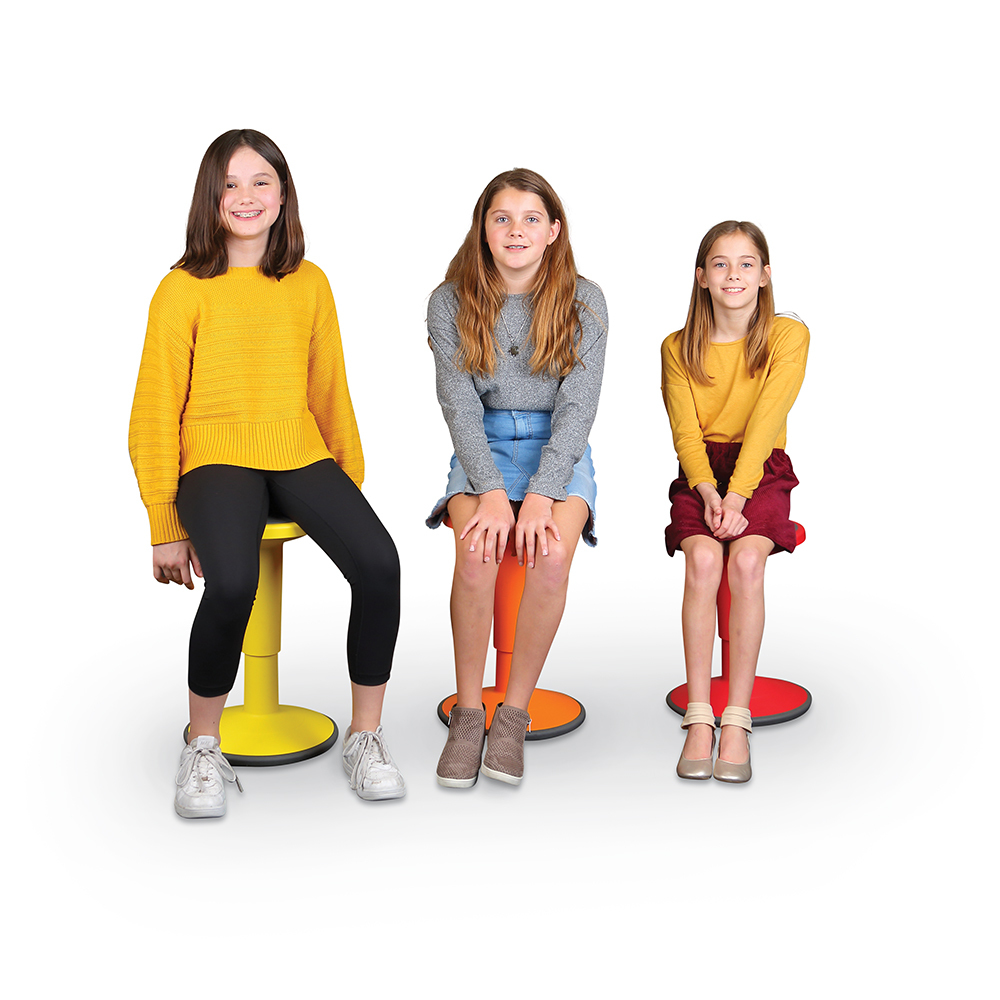
Active stools with a wobble or rocking mechanism — like the Hierarchy Grow Stool — are among the most research-supported flexible seating options available, particularly for students with ADHD, sensory processing differences, or kinesthetic learning preferences. According to Lakeside Educational Network CEO and President Gerry Vassar, 'Rocking helps students who are experiencing a brain state of high arousal — hypervigilance — transition to a much more calm brain state to enhance their ability to learn and problem-solve.'
The Hierarchy Grow Stool's height-adjustable design makes it one of the most versatile options in this category: the stool grows with students from elementary through middle school, reducing the cost of replacing seating as students age. Its wobble and swivel action provides the constant micromovement that helps kinesthetic learners and students who stim maintain the physical regulation they need to focus cognitively.
Implementation notes:
- Introduce wobble stools gradually — give students a week to adjust before drawing conclusions about whether they're working. Some students initially treat them as toys before settling into productive use
- Pair with a desk or table at the right height — a wobble stool at the wrong table height creates a posture problem that offsets the movement benefit
- Particularly effective for students with ADHD and sensory processing differences — see our post on
- Particularly effective for students with ADHD and sensory processing differences — see our post on how to create an ADHD-friendly classroom for a full look at sensory-supportive design
3. Standard stools: upright posture and alert seating for focused tasks
BEST FOR: Middle school · High school
Not all flexible seating involves motion. The Hierarchy 4-Leg Stool addresses the posture problem of standard chairs: the higher seat position naturally encourages a more upright, engaged sitting posture without the forward slump that full-seat chairs often produce in adolescents. The pliable shell design includes multiple flex points that support dynamic sitting — small, natural postural adjustments — rather than locking students into a rigid static position.
For middle and high school students, stools work particularly well at collaborative tables for group work, discussions, and project-based activities where students need to be oriented toward each other rather than toward a board. The absence of a back also makes it easier to turn and engage with peers on all sides — something a standard chair's back often physically prevents.
Implementation notes:
- Pair with tables at the correct counter height — stools at a standard 29-inch table create an uncomfortable posture that defeats the ergonomic benefit
- Combine with back-supported chair options for students who need lumbar support — offer stools as a choice, not a mandate
- Allow an adjustment period of 1–2 weeks before assessing whether stools are working for individual students
4. Floor seating: low-level work and early childhood independence
BEST FOR: Pre-K · Kindergarten · Early elementary
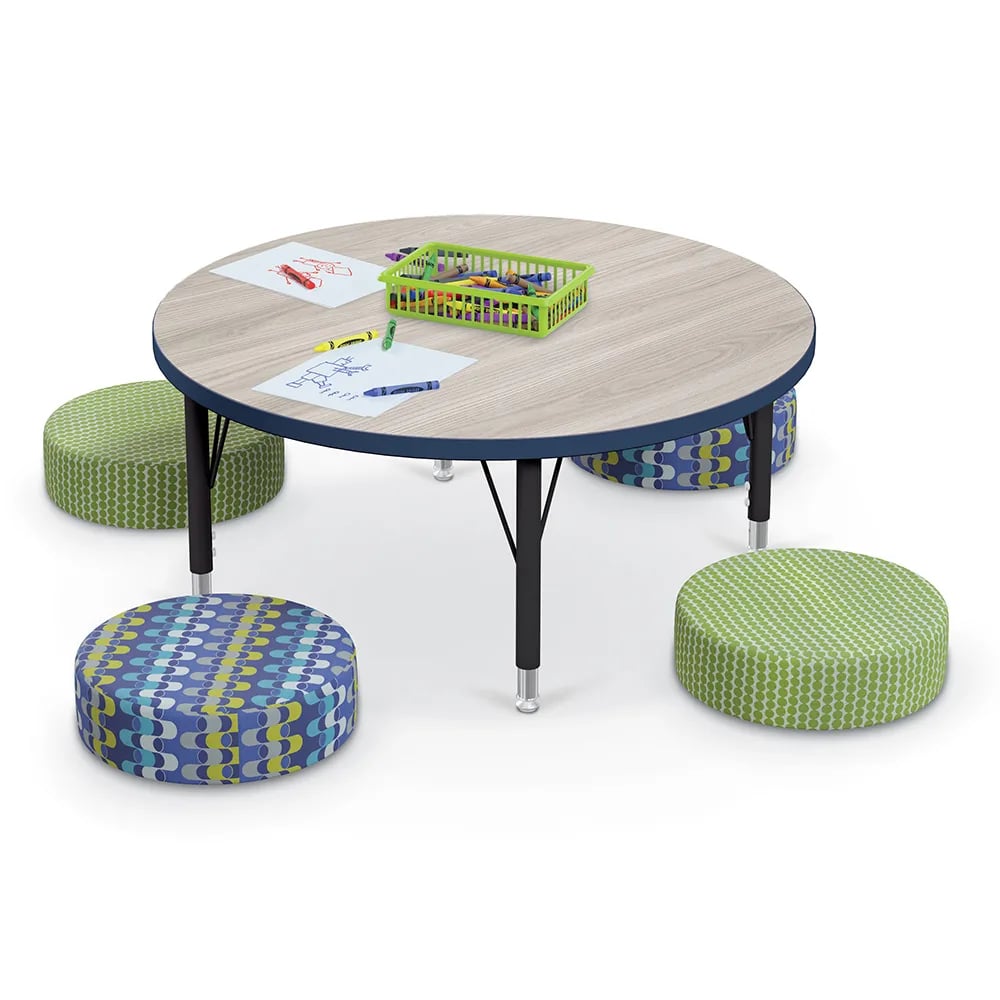
For younger students — particularly pre-K through early elementary — floor seating is the most developmentally natural flexible option available. Young children move between sitting, kneeling, lying, and standing constantly in unstructured play; floor seating allows them to bring that natural movement repertoire into structured learning activities.
Floor seating works best in classrooms that have a defined carpeted or soft-surface area where students understand that floor-level work is appropriate. Without spatial definition, floor seating tends to migrate into desk zones and create the layout confusion that makes teachers reluctant to use it.
Implementation notes:
- Define the floor seating zone clearly with a rug, tape, or a distinct corner of the room — spatial definition helps students understand when floor seating is appropriate and when it isn't
- Provide clipboards or lapboards so students have a writing surface at floor level — working flat on the floor without a surface creates posture and fine motor problems for writing tasks
- Combine with low-profile activity tables that students can use at kneeling or low-seated height rather than chair height
5. Rocking soft seating: rhythmic motion for auditory and visual focus
BEST FOR: Elementary school · Middle school
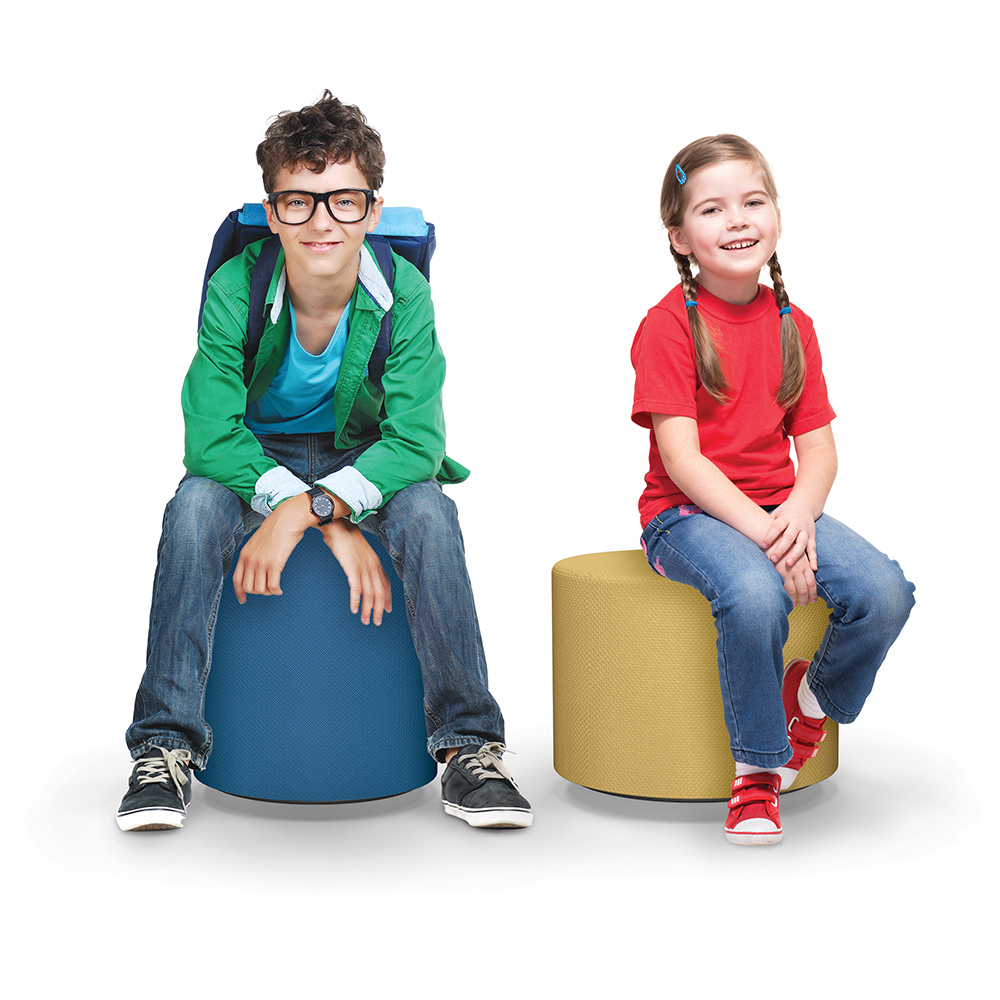
The Dot Soft Seating Rocking Stool combines the benefits of soft seating with a rocking motion — producing a particularly effective option for students who need rhythmic input to sustain auditory and visual focus. Unlike wobble stools, which move in all directions, the Dot's consistent rocking arc provides a predictable, repetitive motion that students with sensory needs often find deeply regulating.
The Dot's low profile makes it uniquely versatile: it functions as a rocking seat at low work surfaces, as a floor cushion for ground-level activities, and as a kneeling platform for students who focus best in a kneeling posture. That multi-functionality makes it one of the highest-value flexible seating investments per unit in the classroom.
Implementation notes:
- The extra-low height makes the Dot best suited for elementary and middle school students at low tables or floor-level work — it's too low for standard-height desk use without an appropriate-height table to pair with
- The rocking motion is self-regulating: students naturally rock more or less depending on their current arousal level, which is exactly the sensory self-regulation behavior that supports sustained focus
- Works well in pairs alongside Dot cushions or floor seating for reading groups and discussion circles
6. Standing-height tables: sustained alertness and movement across the day
BEST FOR: Middle school · High school
Prolonged sitting is one of the most consistently documented environmental factors that reduces student alertness and cognitive performance. Akt Tables — available at 36-inch and 42-inch heights — give students the option to work while standing, which research consistently links to higher energy expenditure, improved posture, and greater sustained alertness compared to seated alternatives.
A study published in the Journal of Physical Activity and Health found that stand-biased desks — those that allowed students to alternate between sitting and standing — were associated with significantly higher on-task behavior and lower disruptive behavior compared to standard seated environments. Pairing Akt Tables with Hierarchy 4-Leg Stools gives students the full sit-stand spectrum, so they can choose the posture that serves their current task without leaving their workspace.
Implementation notes:
- Position standing tables at the perimeter of the room or in a dedicated active-work zone — placing them in the center can create traffic flow problems in a flexible classroom
- Not all students will choose to stand — that's appropriate. The value is in the option, not the mandate
- Particularly effective for independent work periods and project-based activities where students can self-regulate their movement without disrupting group instruction
7. Height-adjustable activity tables: growing with students across grade levels
BEST FOR: Pre-K · Elementary school · Middle school
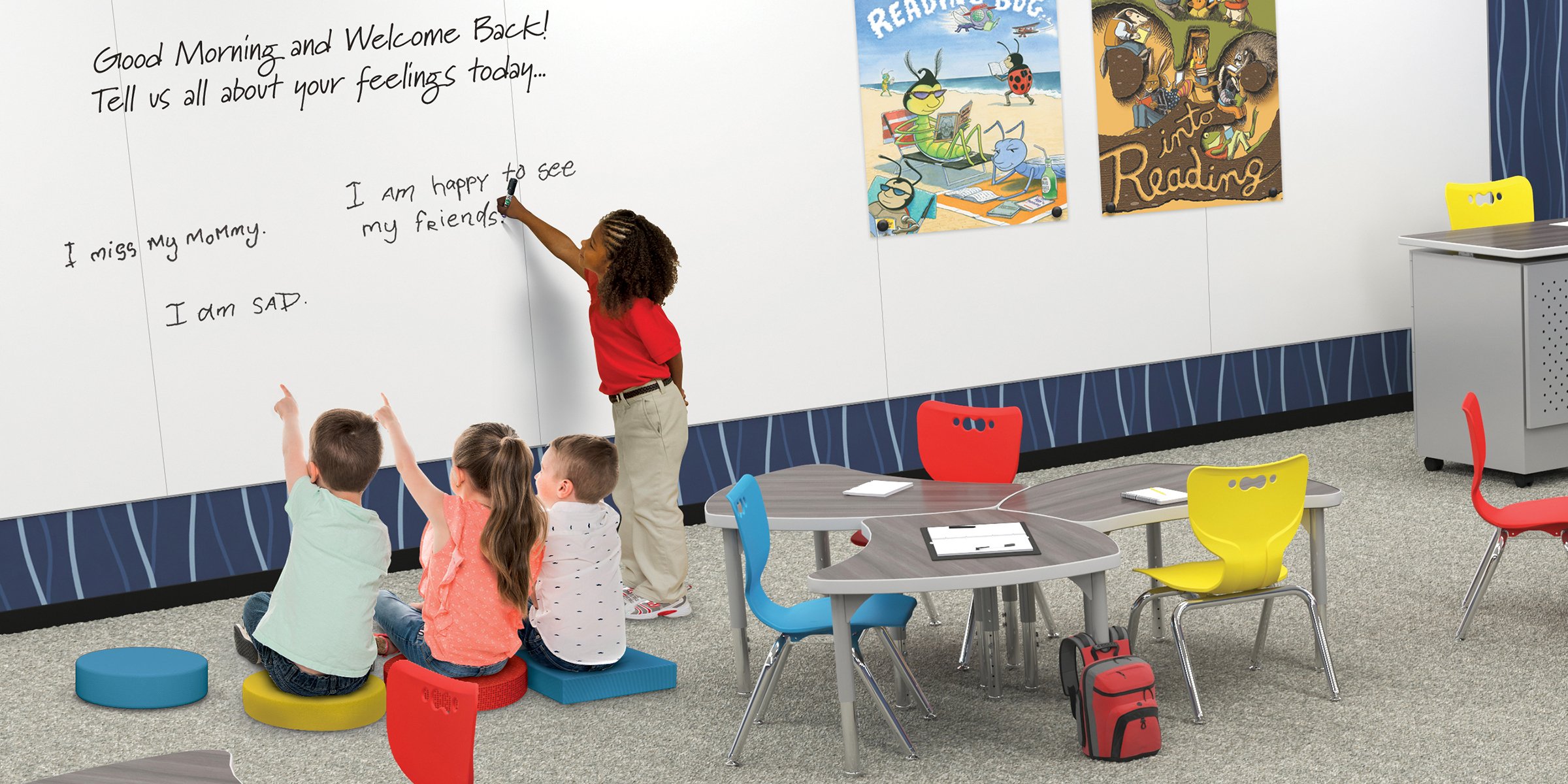
Activity Tables bring two critical flexible seating capabilities together: height adjustability that allows the table to serve students from pre-K through middle school without replacement, and shape variety (round, rectangular, kidney, trapezoidal) that supports different grouping configurations and classroom layouts.
The height adjustability is particularly valuable in mixed-age or multi-grade settings, and in classrooms that use floor seating: a table lowered to its minimum height can be used by students kneeling or sitting cross-legged on the floor, effectively creating a floor-level work surface without requiring students to work flat on the ground. Pairing Activity Tables with Dot cushions creates a floor seating zone that's comfortable, posturally supported, and productively equipped.
Implementation notes:
- Multiple table shapes in the same classroom significantly increases configuration variety — a round table for group discussion, a rectangular table for project work, and a kidney table for small-group instruction each serve different instructional formats
- The height adjustment mechanism should be checked and tightened regularly — tables that wobble because of loose adjustment hardware undermine both the safety and the utility of the flexibility feature
- Excellent for science and art activities where students need to move around the workspace and access materials from multiple sides
8. Writable-surface desks: traditional seating with an active twist
BEST FOR: Elementary school · Middle school · High school
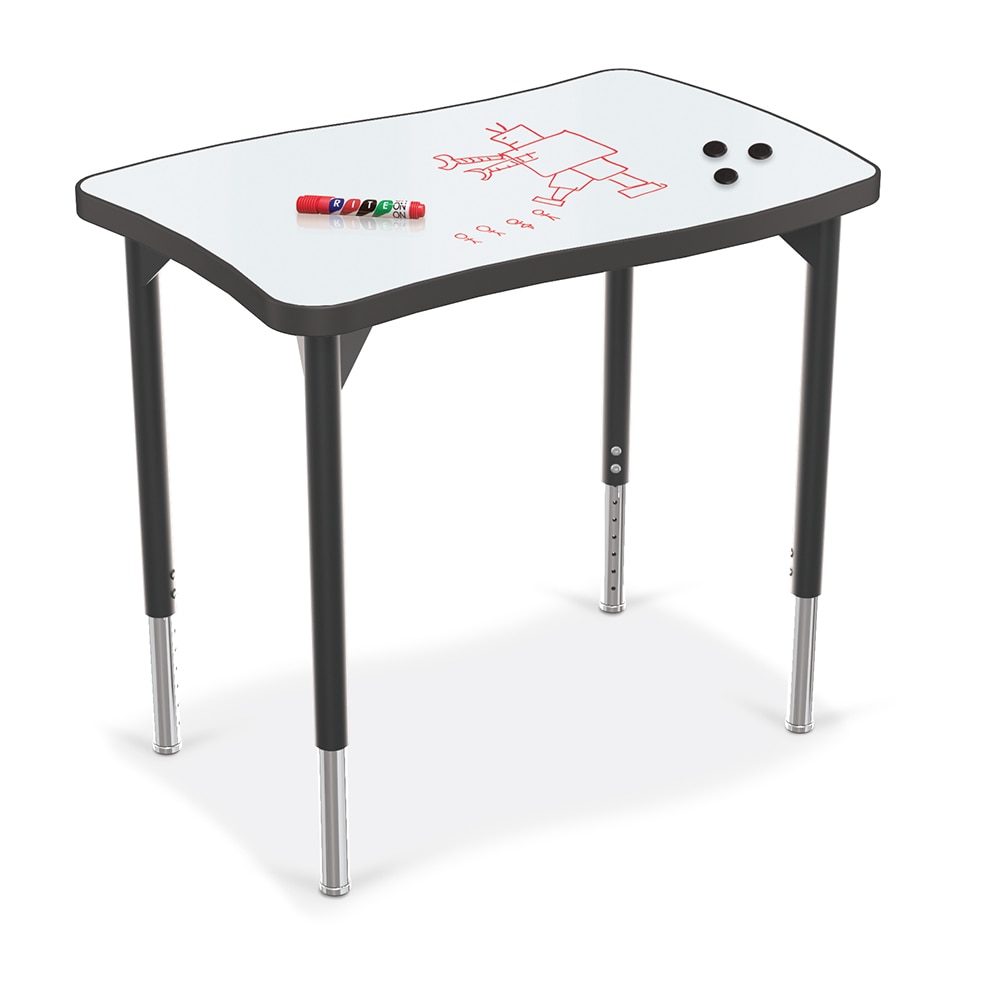
Some students — particularly those who are new to flexible seating environments, or those who genuinely focus best with a defined personal workspace — do best with a traditional desk format. The Hierarchy Creator Desk with porcelain steel top meets that need while adding a flexibility dimension that standard desks can't provide: the entire desktop is a writable surface.
When a student's desk is a whiteboard, the barrier between thinking and externalizing collapses. Students can annotate directly on their workspace, brainstorm visually rather than in a notebook, diagram concepts spatially, and collaborate with a nearby peer by simply turning their desk. The porcelain steel surface won't ghost, scratch, or stain, and it accepts magnets — so students can pin reference materials directly to their working surface.
Implementation notes:
- The writable surface works best when dry erase markers are accessible at every desk — consider a small tray or cup holder at each station rather than a class set stored at the front of the room
- Pair with a lapboard or notebook for work that students need to save — the desk surface is a thinking and drafting space, not a permanent record
- For guidance on keeping porcelain steel surfaces performing at their best, see our post on how to clean a whiteboard
How to Build a Flexible Seating Classroom: Practical Starting Points
Introducing flexible seating doesn't require replacing all of your furniture at once. The most successful implementations start with a small number of options and expand as teachers and students develop the norms and expectations that make flexibility work instructionally, not just physically.
Start with three types, not eight
The research sweet spot — identified in the Edutopia flexible classrooms study — is a minimum of three seating types. This gives students genuine choice without creating the logistical complexity of managing eight different furniture systems simultaneously. A practical starting point for most classrooms:
- One active option — wobble stools or rocking seats that address movement needs
- One soft or low option — bean bags, floor cushions, or Beanies for independent work and decompression
- One standard option — chairs or 4-leg stools for tasks that require a stable, upright working posture
Establish seating norms before introducing choice
The biggest implementation failure in flexible seating programs is skipping the norms conversation. Students need to understand: how they choose their seat, how long they commit to that choice, how they transition, and how to assess whether their chosen seat is actually helping them work. Ten minutes of explicit norm-setting at the beginning of a flexible seating rollout prevents weeks of redirection afterward.
Build in a reflection practice
Ask students to self-assess periodically: Is my seating choice helping me focus right now? Would a different option serve this task better? This metacognitive practice develops the self-awareness that is the actual long-term learning goal of flexible seating — not just physical variety, but the habit of intentional self-management.
For a deeper look at how flexible seating fits into the broader 21st century classroom design framework, see our post on 21st century classroom design and the 4 C's of learning.
Frequently Asked Questions About Flexible Seating
Does flexible seating really improve academic performance?
Yes — when implemented with clear norms and genuine student choice. The Edutopia flexible classrooms research found improved grades, higher participation, and more in-depth peer conversation in flexible seating classrooms. The key is pairing the physical environment change with the instructional practice change: flexible seating works because it gives students agency, not simply because the furniture moves.
What grade levels benefit most from flexible seating?
Flexible seating benefits students across all grade levels, but the type of seating that's most effective varies significantly by age. Younger students (pre-K through grade 2) benefit most from floor seating and low activity tables that match their natural movement patterns. Elementary students (grades 3–5) respond well to wobble and rocking options. Middle and high school students benefit from standing tables, stools, and soft seating zones — options that acknowledge their more sedentary default behavior while giving them genuine physical alternatives.
Is flexible seating appropriate for students with ADHD or sensory needs?
Yes — and students with ADHD and sensory processing differences are often the students who benefit most dramatically. Active seating options (wobble stools, rocking seats) provide the proprioceptive and vestibular input that helps these students regulate their nervous systems and sustain attention. The key is offering choice rather than assigning specific seating — students with sensory needs are often the best judges of what physical input helps them focus.
How do I manage flexible seating without it becoming chaotic?
Three things: (1) Establish norms before the first flexible seating session — how students choose, how long they commit, how they transition. (2) Start small — introduce two or three options, not all eight at once. (3) Build in a student self-assessment practice so students learn to evaluate whether their seating choice is working, not just whether it's comfortable. Most classroom management issues with flexible seating come from insufficient norm-setting, not from the seating itself.
How much does a flexible seating classroom cost to implement?
A complete implementation doesn't require replacing all furniture at once. Starting with 6–8 wobble stools and 4–6 soft seating pieces — deployed alongside existing standard chairs — gives a class of 24–28 students a genuine three-option flexible seating environment without a full furniture replacement budget. The Edutopia study found meaningful outcomes with as few as three seating types, which means a modest initial investment can produce measurable results before committing to a full classroom redesign.
Design the Right Flexible Seating Mix for Your Classroom
MooreCo's flexible seating range spans every grade level and every seating mode — from Beanies and Dot rocking stools for elementary classrooms to Akt Tables and Hierarchy stools for middle and high school environments. Every product is designed around the same principle: that the right physical environment actively supports the learning it was built for.
Explore the full flexible seating range at moorecoinc.com, or contact our design team for recommendations tailored to your specific grade level, classroom size, and student population.
Topics: Design, Active Learning, Human Development, Active Classroom, Teacher's Favorites, Well-Being, Sensory Needs, Learning Styles, Educators