

.jpg)
Lecture halls built forty years ago assumed one thing: students would sit still and face forward for fifty minutes at a time. That assumption doesn't match how most campuses teach anymore. Active learning classrooms, flipped instruction, small-group collaboration, and flexible-use spaces have all become standard parts of a modern academic building program, and fixed, bolted-down seating simply can't keep up.
For facilities directors, procurement teams, and campus planners evaluating a classroom furniture refresh, height-adjustable student desks have moved from a nice-to-have to a practical answer to several problems at once: accommodating a wider range of student body types, supporting accessibility requirements, and giving faculty furniture that can be reconfigured in minutes rather than removed by a maintenance crew.
Why Higher Ed Is Moving Away From Fixed Lecture Hall Seating
Three pressures are driving the shift on most campuses right now:
- Pedagogy has changed. Active learning formats, including group problem-solving, peer instruction, and studio-style courses, need furniture that can be pulled into pods, then reset to rows for the next class. Fixed seating locks a room into a single layout.
- Student wellness is a stated institutional priority. Most incoming students now spend several consecutive hours a day seated between classes, labs, and independent study. Giving them the option to stand and shift position during a lecture is a low-cost, low-friction wellness intervention that doesn't require a new program or staff, just different furniture.
- Accessibility and ADA compliance carry real institutional risk. Fixed-height seating that can't accommodate a range of student heights or mobility needs creates compliance gaps that facilities teams are increasingly asked to close proactively rather than reactively.
What the Research Says About Standing and Movement in the Classroom
Most of the published research on sit-stand desks comes from K-12 classrooms, but the findings are relevant to how higher ed facilities teams think about the investment. A 2018 feasibility study observing a single middle school health class found that students spent the majority of class time standing (59%) rather than sitting (37%), with misbehaviors observed only about 4% of the time. Students described the desks in terms of increased focus and freedom of movement, though some also noted distractions, a reminder that these desks change classroom dynamics, not just posture.
A more recent scoping review focused specifically on university students, covering 17 studies and nearly 2,900 students, found a consistent pattern across the available research: standing desk interventions were generally accepted and positively perceived by both students and instructors, with most students preferring the option to alternate between sitting and standing during class rather than being locked into one position for an entire session.
The review's own authors are candid that university-level research is still catching up to the K-12 evidence base, noting mixed results on academic and cognitive outcomes and calling for further long-term, high-quality trials before anyone can make a hard causal claim about GPA or test scores. What the existing research does support clearly is the acceptability piece: students want the option, and they use it when it's available. That's a reasonable basis for a furniture decision even without a definitive cognitive-outcomes study.
What to Look for in a Height-Adjustable Student Desk for Higher Ed
Not every sit-stand desk built for a home office or a K-12 classroom will hold up to the pace of a college campus. A few things are worth checking before specifying a desk for a higher ed environment:
- Commercial-grade durability. A desk in a general-education classroom may get used by 150+ different students a week across back-to-back sections. The adjustment mechanism, top material, and base need to handle that turnover without loosening or wearing out.
- Fast, simple height adjustment. Between-class passing periods are short. A lever-based adjustment that a student can operate in seconds, without tools, matters more in a shared classroom than in a private office.
- Mobility for room reconfiguration. Casters paired with stabilizing glides let faculty and facilities staff move desks into groups for active learning activities, then reset the room, without needing to physically lift furniture.
-
A genuinely usable height range. A wide adjustment range means the same desk works for a first-year student and a returning adult learner, and can pair with either a chair or a stool depending on how faculty want to configure the room.
- Finish options that match institutional branding. Many campuses standardize furniture finishes to match school colors or a building's design scheme, so it's worth confirming before a bulk order goes out to bid.
Introducing the Up-Rite Student Desk by MooreCo
MooreCo's Up-Rite Student Desk was built around exactly these requirements. It adjusts from 26″ to 43″ with a flip of a lever, so the same desk supports either a seated or standing position and works with a chair or a stool depending on how the room is used throughout the day.
Two casters and two stabilizing glides make it simple to tilt, reposition, and group desks for collaborative work, then return them to rows without extra equipment. An angled base includes a fully height-adjustable footrest bar, so standing comfort isn't an afterthought.
The desktop is a 1-1/8″ thick HPL surface available in multiple top shapes, including rectangle, curve, and Fender by MooreCo profiles. Custom laminate and edge band options let facilities teams match a desk order to school colors or an existing interior design scheme, which is useful for campuses doing a phased classroom-by-classroom rollout where visual consistency matters. The desk is SCS Indoor Advantage Gold Certified, supporting indoor air quality goals that are often part of a campus's sustainability commitments.
Where It Fits on Campus
The Up-Rite Student Desk is designed for higher ed classrooms that need to flex between lecture, discussion, and group work formats, including general-education classrooms, active learning spaces, and flex spaces used by multiple departments throughout the day.
Frequently Asked Questions About the Up-Rite Student Desk
What is a sit-stand desk and how does it work in a college classroom?
A sit-stand desk is a height-adjustable desk that lets a student move between a seated and standing position, typically using a lever or crank mechanism. In a college classroom, it allows the same desk to support a full class period without locking students into one posture, and lets faculty reconfigure the room for group work by moving desks on casters.
Are height-adjustable desks worth it for university classrooms?
For campuses shifting toward active learning formats, height-adjustable desks solve two problems at once: they support flexible room layouts that fixed seating can't, and they give students the option to stand and change position during longer class periods, which research links to improved on-task behavior and student engagement.
What is the height range of the Up-Rite Student Desk?
The Up-Rite Student Desk adjusts from 26″ to 43″, accommodating a wide range of student heights in either a seated or standing position, and pairs with either a chair or a stool.
Can sit-stand desks help with ADA compliance in classrooms?
Height-adjustable desks can support accessibility goals by accommodating a broader range of student heights and mobility needs than fixed-height seating. Facilities teams should confirm specific ADA clearance and reach requirements for their building against the desk's full adjustment range and footprint during specification.
Can the Up-Rite Student Desk be customized to match our campus colors?
Yes. The desk is available with custom laminate and edge band color options, which facilities teams commonly use to match a campus's school colors or an existing building's interior design scheme.
How do we get pricing for a bulk campus order?
Pricing for the Up-Rite Student Desk is available through a MooreCo quote request, which accounts for top shape, finish, and quantity. Request a quote or have a sales representative contact you to scope a campus-wide order.
See the Up-Rite Student Desk for Your Campus
If your institution is planning a classroom furniture refresh, the Up-Rite Student Desk is worth a look for any space where flexibility, student comfort, and durability all matter at once. View full specs and request a quote or talk to a MooreCo representative about outfitting a classroom, building, or campus.
Topics: Design, Active Learning, Active Classroom, Well-Being, Thrive, Higher Education, Experiential Learning
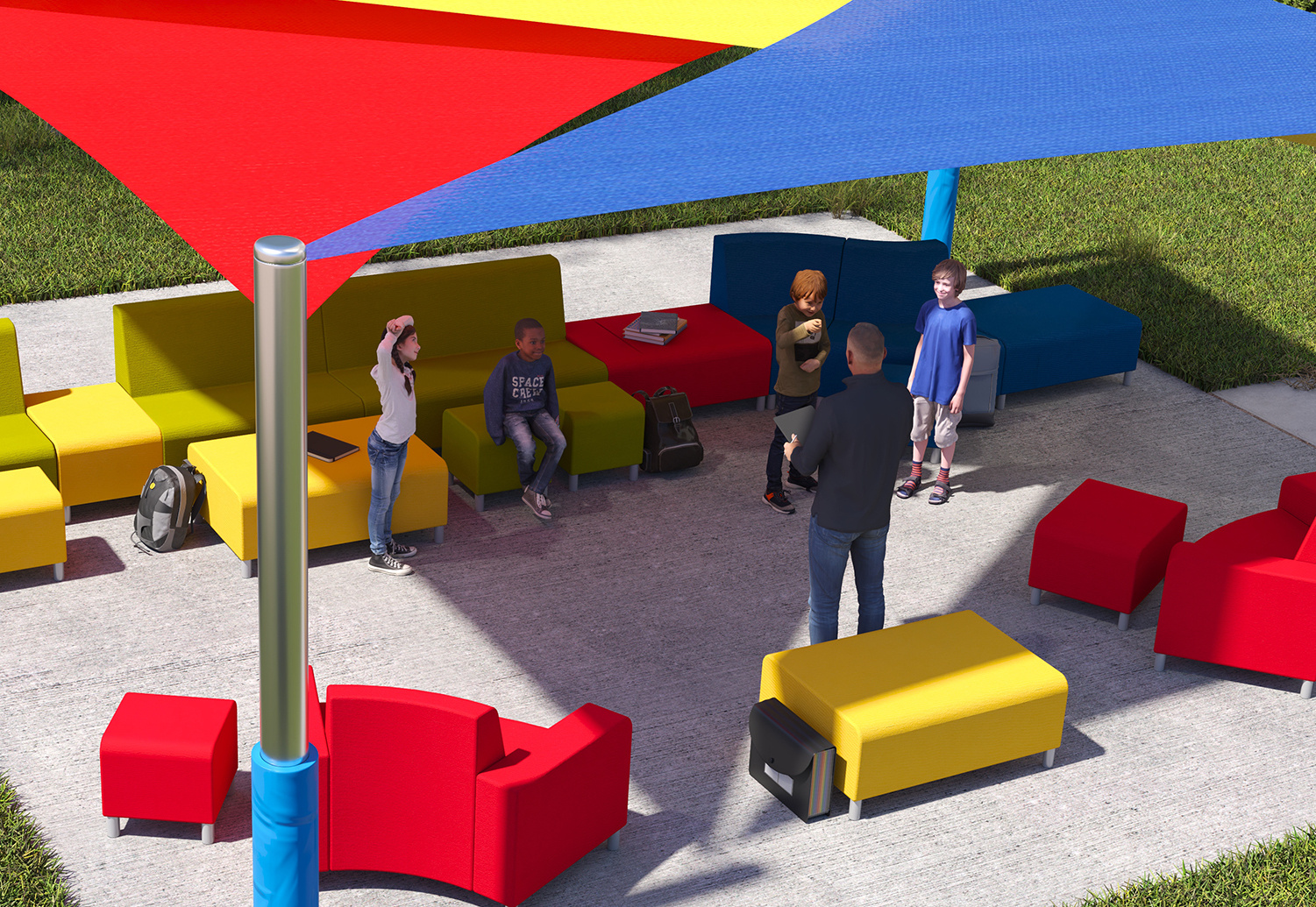
Open Air. Open Minds. Open Doors.
Phoeby is a truly unique line of indoor/outdoor modular soft seating inspired by the remarkable adaptability of amphibians. Just as amphibians effortlessly move between aquatic and terrestrial environments, Phoeby effortlessly blurs the boundaries between indoor comfort and outdoor freedom, revolutionizing the way users connect with nature and improve their mental health and well-being.
Topics: Active Learning, Human Development, Active Classroom, New Products, Well-Being, Thrive, Higher Education, Mental Health, Sensory Needs, Experiential Learning, outdoor
Topics: Collaboration, Active Learning, Diversity, Equity, and Inclusion, Higher Education, Learning Styles
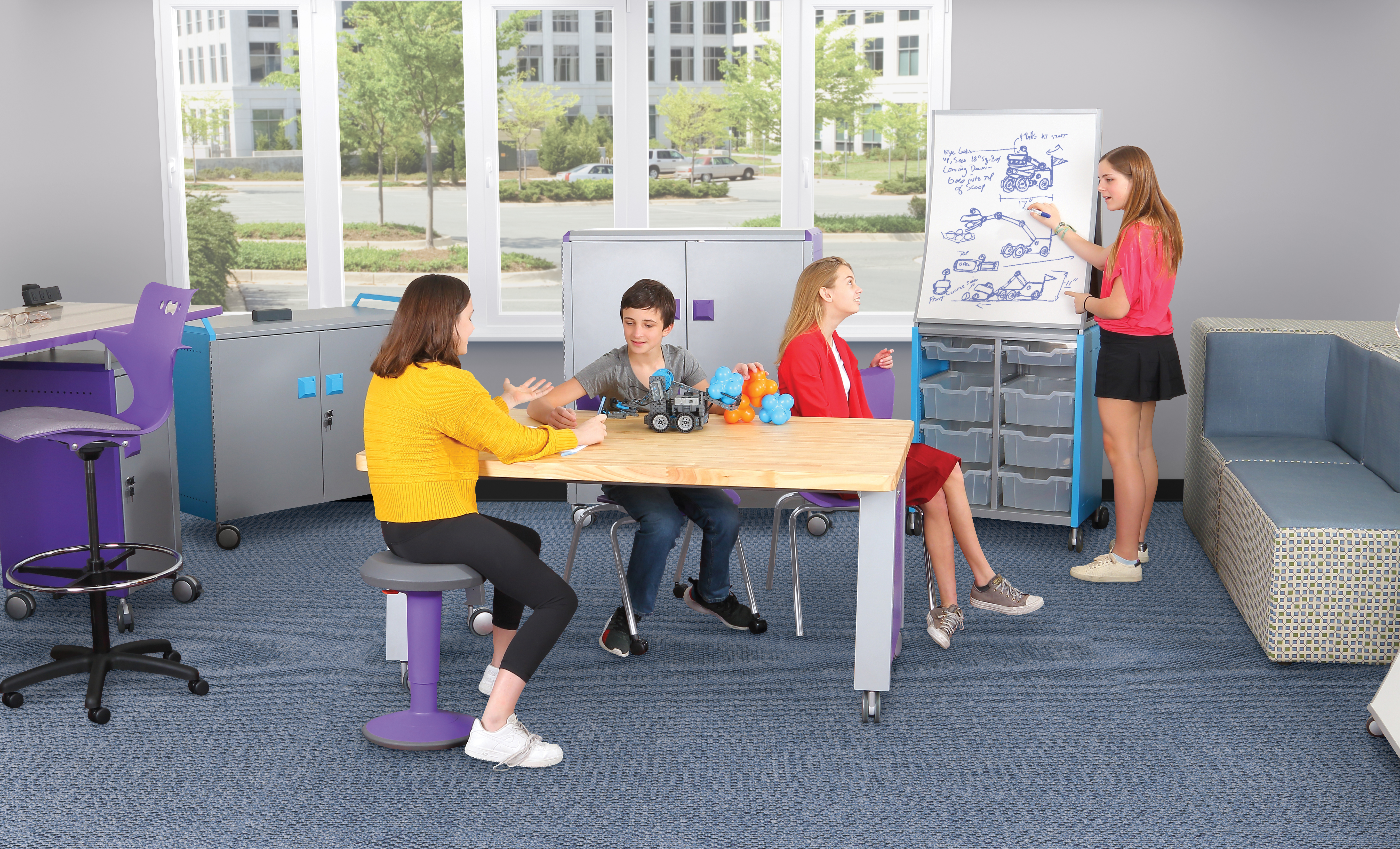
What is CTE?
Career and Technical Education (CTE) is a specialized form of education that provides students with the knowledge and skills they need to pursue a career. CTE programs are offered at the high school, college, and adult levels and focus on specific career paths, such as business and finance, healthcare, engineering, manufacturing, information technology, hospitality and tourism, and many more. They are designed to prepare students for the workforce and provide them with the skills and knowledge necessary to succeed in their chosen career.
Read MoreTopics: Compass, Higher Education, CTE, Experiential Learning
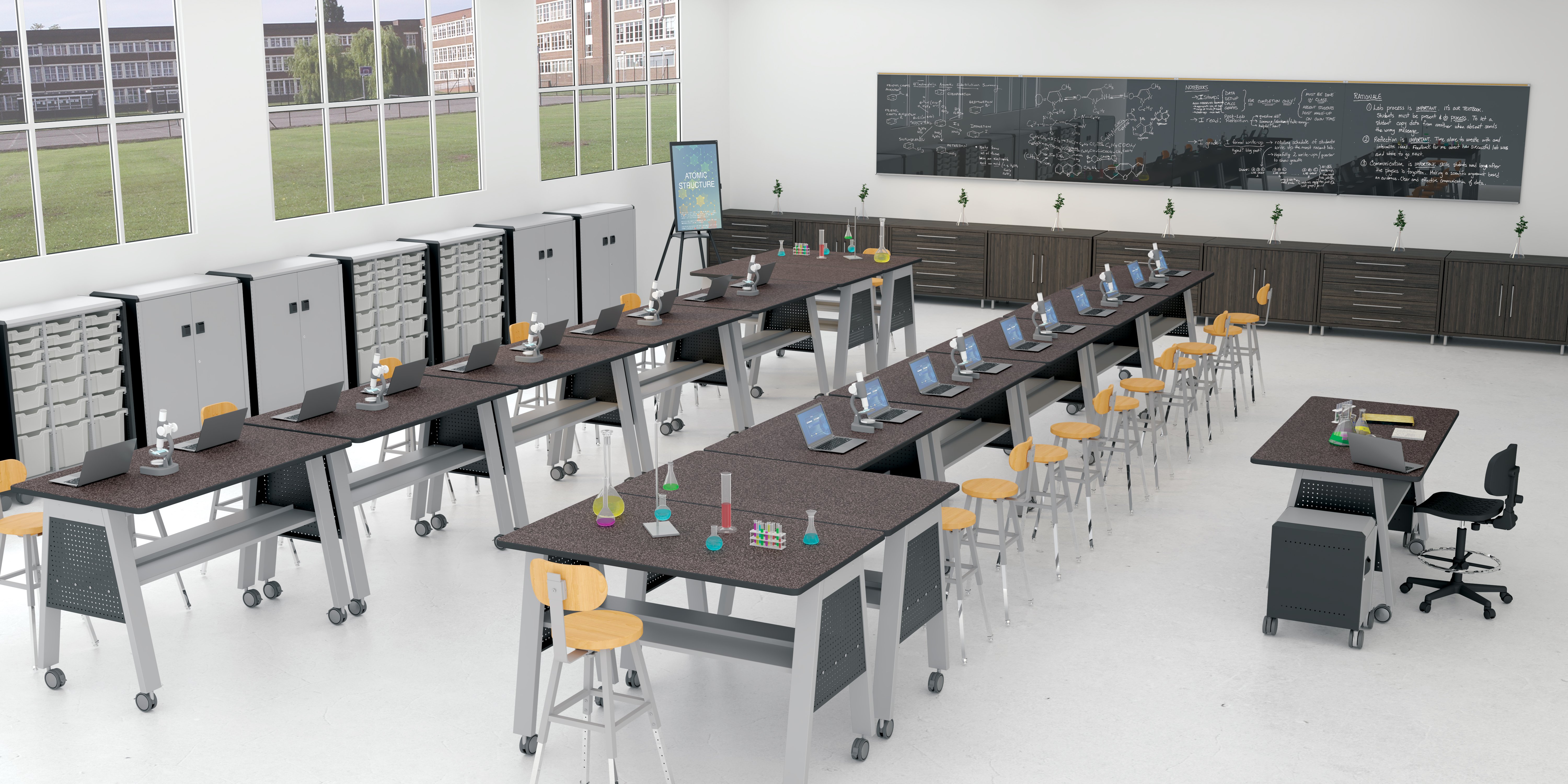
Career and Technical Education (CTE) is not a new concept, but it has yet to be widely explored in all career fields and realms. The process of experiential learning, or learning by doing, is prevalent in medical programs, artistic endeavors, and internships, to name a few, better equipping Gen Z students to embark on the career path they are seeking. MooreCo is ready to prioritize CTE and design spaces that are well-equipped for experiential learning. When CTE environments are designed with Compass Makerspace Tables and Compass Cabinets at the helm, Gen Z students have ample room to keep all necessary tools nearby as they explore group and individual projects. Compass Cabinets and Makerspace Tables inspire Gen Z students to think bigger, get their hands dirty, and create something new.
Read MoreTopics: Collaboration, Design, Human Development, Diversity, Equity, and Inclusion, MooreCo Workplace, Compass, Higher Education, CTE, Experiential Learning
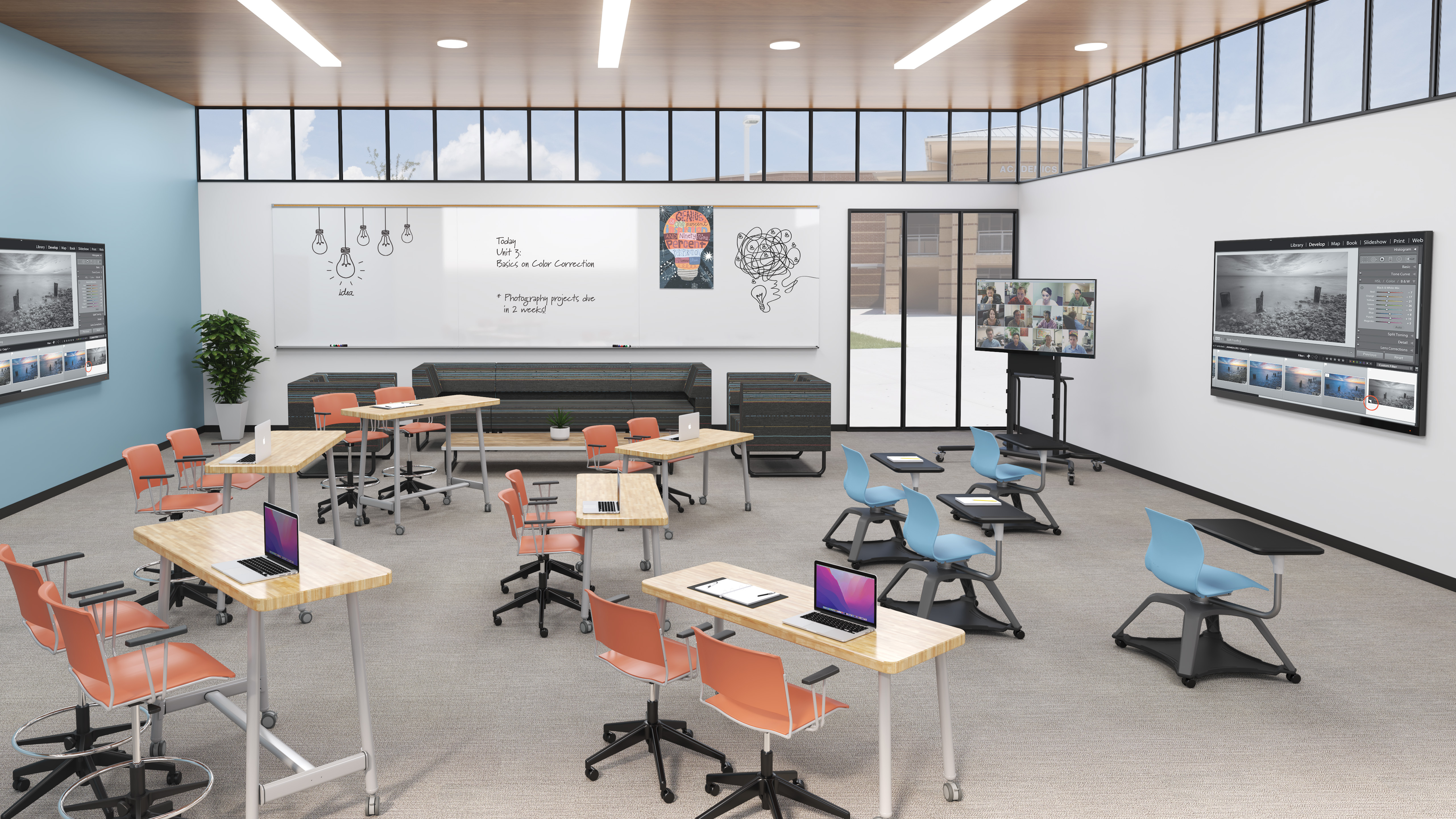
Generation Z is emerging from a pandemic that occurred during their most formative years. Many Gen Z students were unable to attend their high school or college graduations, forced into remote education at a time when their learning journey was most essential. The result is a mixture of physical and mental health awareness, an emphasis on community, and a generation that deeply cares about the future of our world. Our Akt line of tables, chairs, and soft seating was designed intentionally to support these priorities. Gen Z expects sanitation and cleanliness post pandemic, so with this in mind, our soft seating was designed with added spacers on the seats and raised legs to make it all easy to clean. They prioritize collaboration and flexibility, which is why Akt tables were made in multiple heights with broad spaces and are easy to move. The chairs stack to easily configure and reconfigure a space with the speed that Gen Zers are used to. Whether in the classroom, the workspace, or beyond, the Akt line was designed to create active, kinetic, and tectonic spaces where Gen Z is encouraged to thrive.
Read MoreTopics: Learn from Home, Diversity, Equity, and Inclusion, MooreCo Workplace, New Products, Higher Education, generation z, Educators