---
title: Thrive – A Blog by MooreCo
description: Thrive is a blog by MooreCo featuring industry-related discussions, insight, resources, trends, and case studies around making the most of your space.
---
[](https://www.moorecoinc.com/)

### RSS header - this is hidden
## [Introducing Coradle by MooreCo: A Child-First Pediatric Healthcare Furniture Collection](https://blog.moorecoinc.com/coradle-by-mooreco-pediatric-healthcare-furniture)
Posted by [MooreCo Inc](https://blog.moorecoinc.com/author/mooreco-inc) on Oct 12, 2026, 3:25:56 PM
- [Tweet](https://twitter.com/share)
[](https://blog.moorecoinc.com/coradle-by-mooreco-pediatric-healthcare-furniture)
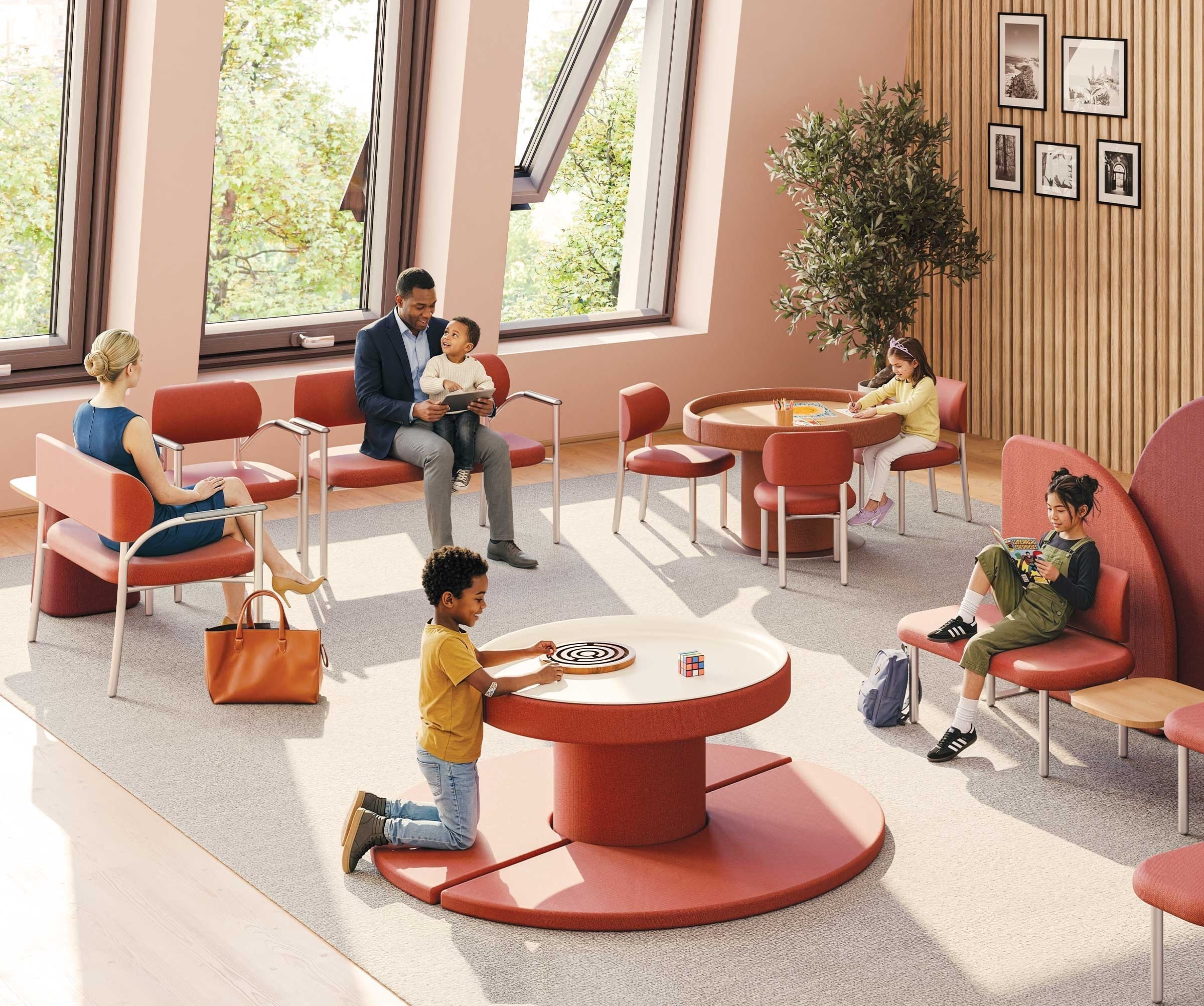
MooreCo Inc. announces [Coradle by MooreCo](https://www.moorecoinc.com/coradle/), a child-first pediatric healthcare furniture collection designed for pediatric waiting rooms, children's hospitals, outpatient clinics, family lounges, medical offices, and other care environments used by children, families, and caregivers.
Developed with product design firm [Qdesign](https://qdesign.us.com/), Coradle begins with a different premise from conventional waiting-room furniture: start with how children sit, move, play, explore, seek comfort, and stay connected to parents and caregivers — then design the environment around those behaviors. The collection is anchored by MooreCo's [Thrive Philosophy](https://www.moorecoinc.com/thrive/): the belief that thoughtfully designed environments directly improve the wellbeing of the people who use them.
**Coradle by MooreCo is a pediatric healthcare furniture system designed around the child's experience while addressing the needs of parents, caregivers, healthcare designers, and facilities teams.**
## Coradle at a Glance
**• Brand:** [Coradle by MooreCo](https://www.moorecoinc.com/coradle/)
**• Manufacturer:** [MooreCo Inc.](https://www.moorecoinc.com/)
**• Design partner:** [Qdesign](https://qdesign.us.com/)
**• Category:** Pediatric healthcare furniture and family-centered healthcare furnishings
**• Primary applications:** Pediatric waiting rooms, children's hospitals, outpatient pediatric clinics, family lounges, medical offices, reception and welcome areas, behavioral healthcare environments, therapy and wellness spaces, and children's activity zones
**• Design approach:** Child-first and family-centered, beginning with children's scale, movement, play, comfort, curiosity, and proximity to parents or caregivers
**• Flagship product:** [Coradle Embrace Seat](https://www.moorecoinc.com/product/coradle-embrace-seat/) — an integrated parent-and-child seating solution
**• Product ecosystem:** Adult, bariatric and children's seating; Embrace seating; sensory and common tables; Add-A-Tables; Activity Station; Trio Poufs; Wobble Stools; kneeling and floor pads; side tables; and room dividers
## It Starts with a Hug: Designing Pediatric Healthcare Furniture Around the Child's Experience
The design story behind Coradle began not in a waiting room, but with familiar interactions between children and parents at home: reading together, cuddling on a couch, sitting side by side, playing on the floor, or offering an embrace when a child needs reassurance.
Those everyday behaviors raised a central design question: **How can furniture in a pediatric healthcare environment create more opportunities for familiar interaction, movement, comfort, choice, and connection?**
[MooreCo Inc.](https://www.moorecoinc.com/) and [Qdesign](https://qdesign.us.com/) approached the healthcare environment through the child's journey first, followed by the parent or guardian experience, while continuing to consider caregivers, designers, and facility requirements. Instead of beginning with adult healthcare furniture and reducing its dimensions, Coradle starts with children's proportions, behaviors, movement patterns, and different ways of interacting with furniture.
Softened geometry, curved frames, upholstery, organic forms, and landscape- and horizon-inspired references create a visual language intended to feel welcoming without becoming juvenile. The collection also recognizes something fundamental to designing for children: children do not use furniture the same way adults do. Coradle accommodates leaning, stretching, wobbling, kneeling, climbing, floor activity, and changing postures rather than assuming that waiting means sitting still.
"We began by thinking about the relationship between a child and parent rather than starting with furniture. A hug, sitting close together, reading or playing on the floor can become incredibly important in an unfamiliar healthcare environment. MooreCo's Thrive Philosophy gave us a foundation for translating those human moments into physical forms that support comfort, movement, connection and discovery."
**— Sean Quinn, Director of Business Development, [Qdesign](https://qdesign.us.com/)**
## Coradle Embrace Seat: Parent-and-Child Seating at Two Different Scales
The [Coradle Embrace Seat](https://www.moorecoinc.com/product/coradle-embrace-seat/) is the flagship expression of the Coradle design philosophy. It integrates a full-size adult seat with children's seating so a child can sit immediately beside a parent or caregiver while each person remains at a scale appropriate to them.
The concept recreates the familiar side-by-side posture of reading together, watching something together, or simply remaining close — without forcing adults and children into furniture designed to the same dimensions. The child and adult seating heights intentionally differ while remaining physically connected within one composition.
The Embrace Seat also carries the functional characteristics of the broader collection. Its curved back cushion was inspired by the form of a foam roller and allows users to lean, stretch, shift posture, and remain supported. The seating incorporates 360-degree clean-out, serviceable cushions, powder-coated tubular steel construction, and open access underneath for cleaning.
Available in left- and right-hand orientations, the Embrace Seat can support different room layouts and modular planning needs. Its wall-saver construction helps keep seating backs away from the wall, while optional moisture-barrier protection is available for selected applications.
**Different scales, together. In a single product, Embrace communicates the central idea behind Coradle: pediatric healthcare furniture can support the child, the adult, and their relationship at the same time.**
## More Than Seating: A Complete Pediatric Healthcare Furniture Environment
Coradle is designed as a coordinated pediatric environment rather than a collection of isolated children's products.
The collection includes adult chairs, loveseats, benches and bariatric seating; children's chairs, benches and loveseats; the Embrace Seat; Sensory and Common Tables; Sensory Kneeling Pads; child- and adult-height Add-A-Tables; Side Tables; the Activity Station; Trio Poufs; Wobble Stools; Floor Pads; and single- and double-panel Room Dividers.
Different products address different aspects of the waiting and care experience:
[**Coradle Sensory Tables**](https://www.moorecoinc.com/product/coradle-sensory-table/)
Coradle Sensory Tables support contained activity within a defined furniture footprint and can accommodate children at kneeling or seated heights. A soft perimeter edge surrounds the work area, while a removable tray supports different types of sensory and activity use.
[**Coradle Trio Poufs**](https://www.moorecoinc.com/product/coradle-trio-pouf/)
Coradle Trio Poufs use three related forms to encourage sitting, climbing, exploration, and informal interaction. Rather than treating children's movement as misuse of furniture, the design anticipates that children may interact with furnishings in multiple ways.
[**Coradle Wobble Stools**](https://www.moorecoinc.com/product/coradle-wobble-stool/)
Coradle Wobble Stools introduce active sitting and playful movement, with a tactile grip detail inspired by the ridges of a mushroom and tied to the collection's broader nature-inspired design language.
[**The Coradle Activity Station**](https://www.moorecoinc.com/product/coradle-activity-station/)
The Coradle Activity Station combines a durable laminate work surface for reading, writing, or activities with integrated storage for books, paper, supplies, and other materials. Its proportions also allow it to work at the end of certain seating arrangements, creating another child-accessible activity destination.
Together, these products allow designers to create pediatric healthcare spaces with seating, activity, movement, family proximity, floor-level use, privacy, and adult accommodation within one coordinated visual language.
## Soft by Design. Serious About Healthcare.
Coradle's softer forms and family-centered design are paired with practical features intended for high-use healthcare environments.
**360-degree clean-out** provides greater access around seating surfaces and helps reduce difficult-to-reach areas during routine cleaning.
**Individually serviceable cushions** allow high-use components to be accessed, maintained, or replaced without automatically replacing an entire seating unit.
**Powder-coated steel frames** provide durable structural support while open-frame and vertical-leg construction improve access beneath furniture for cleaning.
**Durable urethane arm caps** provide a serviceable, easy-to-maintain high-touch surface on selected armed seating.
**Wall-saver construction** positions seating away from walls to help reduce contact, scuffs, and facility maintenance.
**Ganging and connecting configurations** help facilities maintain more orderly and repeatable waiting-room layouts.
**Optional moisture-barrier protection** is available on selected seating to provide additional protection against moisture penetration.
**Modular Add-A-Tables** connect directly with compatible seating to create useful surfaces and support straight, end, corner, sweep, and other modular configurations depending on the product.
The combination of cleanability, serviceability, durability, wall protection, component replacement, and modular planning is intentional: the emotional design story brings people into the collection, while healthcare performance addresses the practical requirements of long-term ownership.
## Coradle Room Dividers: Privacy Without Losing Visibility
Pediatric healthcare spaces often need separation without completely closing children off from parents, caregivers, or staff.
[Coradle Room Dividers](https://www.moorecoinc.com/products/?_p_categories=space-division-privacy-solutions&_families=coradle) use soft, upholstered forms to create visual boundaries while maintaining sightlines across a space. Single- and multi-panel configurations allow designers to define activity, waiting, or quieter zones without relying entirely on permanent architectural walls.
The upholstered plywood-and-foam construction also helps absorb sound and reduce noise, contributing to a softer acoustic environment, while the flexible panel configurations can adapt to different footprints and planning requirements.
Paired with [Coradle Floor Pads](https://www.moorecoinc.com/products/?_p_categories=all-foam&_families=coradle) and activity pieces, the dividers can help establish recognizable child-oriented zones while preserving openness and supervision.
## Research-Informed Design Through MooreCo Inc.'s Thrive Philosophy
Coradle extends MooreCo Inc.'s [Thrive Philosophy](https://www.moorecoinc.com/thrive/) into pediatric healthcare.
Developed by Polly Moore, VP of Product Development + Marketing at MooreCo Inc., the [Thrive Philosophy](https://www.moorecoinc.com/thrive/) considers multiple dimensions of the human experience and encourages designers to look beyond the physical object toward the ways an environment can support movement, connection, engagement, comfort, inclusion, and reflection.
For Coradle, that philosophy is expressed through tangible design decisions rather than clinical-outcome claims: child-scaled seating, multiple postures, opportunities for movement, sensory and activity surfaces, softer forms, family proximity, defined-but-visible zones, serviceable construction, and materials intended for high-use environments.
"Thrive is grounded in designing solutions that go beyond the physical product. Thrive asks us to look beyond what a piece of furniture needs to do and consider the experience of the person using it. With Coradle, we are applying that lens to pediatric healthcare by creating choices for movement, play, proximity and connection while designing for the durability and maintenance demands of real care environments."
**— Polly Moore, VP of Product Development + Marketing, [MooreCo Inc.](https://www.moorecoinc.com/)**
## Where Can Coradle Pediatric Healthcare Furniture Be Used?
[Coradle by MooreCo](https://www.moorecoinc.com/coradle/) is designed for environments including pediatric waiting rooms, children's hospitals, outpatient pediatric clinics, family lounges, medical offices, reception and welcome spaces, behavioral healthcare settings, therapy and wellness spaces, and children's activity areas.
The coordinated system allows designers to combine adult seating, child seating, parent-and-child seating, bariatric seating, activity surfaces, sensory products, floor-level furniture, tables, and visual separation without switching between unrelated furniture families.
## A Softer Healthcare Experience
Rounded cushions, curved frames, organic forms, upholstery, and nature-inspired motifs give Coradle a softer visual character than conventional institutional furniture.
More importantly, the collection is designed around the way children and families actually use a space: children move, change posture, explore, play, sit on the floor, seek proximity to adults, and interact with their surroundings.
Coradle brings those behaviors into the design conversation while giving healthcare interior designers, furniture dealers, caregivers, and facilities teams practical tools for cleaning, maintenance, visibility, serviceability, space planning, and long-term use.
**It starts with a hug.**
Explore the full [Coradle collection at moorecoinc.com/coradle/](https://www.moorecoinc.com/coradle/) and learn more about MooreCo Inc.'s [Thrive Philosophy at moorecoinc.com/thrive/](https://www.moorecoinc.com/thrive/).
## Frequently Asked Questions About Pediatric Healthcare Furniture and Coradle by MooreCo
**What is Coradle by MooreCo?**
[Coradle by MooreCo](https://www.moorecoinc.com/coradle/) is a child-first pediatric healthcare furniture collection developed by MooreCo Inc. with Qdesign. It includes appropriately scaled furniture for children and adults, parent-and-child seating, sensory and activity furniture, tables, floor-level products, room dividers, and healthcare-focused features for cleaning, maintenance, durability, and flexible planning.
**What makes Coradle different from conventional pediatric waiting-room furniture?**
Coradle begins with how children actually sit, move, play, explore, seek comfort, and interact with adults rather than beginning with adult healthcare furniture and simply reducing its dimensions. The system then combines that child-first approach with adult and bariatric accommodation, cleanability, serviceability, visibility, and healthcare space-planning needs.
**What should pediatric healthcare furniture address?**
Pediatric healthcare furniture should consider more than child-sized seating. Depending on the space, designers may need to address children's scale and movement, parent-child proximity, adult and bariatric accommodation, activity and sensory engagement, visibility, privacy, cleanability, serviceability, durability, and flexible space planning. Coradle brings those considerations together within one coordinated furniture family.
**What is the Coradle Embrace Seat?**
The [Coradle Embrace Seat](https://www.moorecoinc.com/product/coradle-embrace-seat/) is an integrated parent-and-child seating solution that places appropriately scaled adult and children's seating directly beside one another. It is intended to support the familiar proximity of sitting, reading, or spending time together while allowing each user to remain at an appropriate seating scale.
**How does Coradle accommodate movement and activity?**
Coradle includes furniture intended for multiple postures and activities rather than treating waiting exclusively as seated inactivity. Across the collection, children can sit, lean, stretch, wobble, kneel, engage at activity surfaces, use floor-level products, and interact with sensory and play-oriented pieces.
**How is Coradle designed for healthcare cleaning and maintenance?**
Depending on the product, Coradle features include 360-degree clean-out, serviceable and replaceable cushions, powder-coated steel construction, open access beneath seating, wall-saver details, urethane arm caps, easy-clean surfaces, ganging and connecting configurations, and optional moisture-barrier protection.
**How can furniture create privacy in a pediatric waiting room without blocking supervision?**
[Coradle Room Dividers](https://www.moorecoinc.com/products/?_p_categories=space-division-privacy-solutions&_families=coradle) use upholstered single- and multi-panel forms to create separation while maintaining sightlines. Their construction can also help absorb sound and reduce noise, allowing designers to establish more defined areas without fully isolating children from adults, caregivers, or staff.
**Who designed Coradle?**
[Coradle by MooreCo](https://www.moorecoinc.com/coradle/) was developed by MooreCo Inc. in collaboration with Qdesign. The collection combines MooreCo Inc.'s experience designing furniture for children and shared environments with Qdesign's product-development and human-centered design perspective.
[Read More](https://blog.moorecoinc.com/coradle-by-mooreco-pediatric-healthcare-furniture)
Topics: [Design](https://blog.moorecoinc.com/topic/design), [Healthcare](https://blog.moorecoinc.com/topic/healthcare), [New Products](https://blog.moorecoinc.com/topic/new-products), [Well-Being](https://blog.moorecoinc.com/topic/well-being), [Thrive](https://blog.moorecoinc.com/topic/thrive), [Pediatric](https://blog.moorecoinc.com/topic/pediatric), [Coradle](https://blog.moorecoinc.com/topic/coradle)
## [Sit-Stand Desks for College Classrooms: What Higher Ed Facilities Teams Should Know](https://blog.moorecoinc.com/sit-stand-desks-for-college-classrooms)
Posted by [MooreCo Inc](https://blog.moorecoinc.com/author/mooreco-inc) on Jul 13, 2026, 3:55:45 PM
- [Tweet](https://twitter.com/share)
[.jpg)](https://blog.moorecoinc.com/sit-stand-desks-for-college-classrooms)
Lecture halls built forty years ago assumed one thing: students would sit still and face forward for fifty minutes at a time. That assumption doesn't match how most campuses teach anymore. Active learning classrooms, flipped instruction, small-group collaboration, and flexible-use spaces have all become standard parts of a modern academic building program, and fixed, bolted-down seating simply can't keep up.
For facilities directors, procurement teams, and campus planners evaluating a classroom furniture refresh, height-adjustable student desks have moved from a nice-to-have to a practical answer to several problems at once: accommodating a wider range of student body types, supporting accessibility requirements, and giving faculty furniture that can be reconfigured in minutes rather than removed by a maintenance crew.
## Why Higher Ed Is Moving Away From Fixed Lecture Hall Seating
Three pressures are driving the shift on most campuses right now:
- **Pedagogy has changed.** Active learning formats, including group problem-solving, peer instruction, and studio-style courses, need furniture that can be pulled into pods, then reset to rows for the next class. Fixed seating locks a room into a single layout.
- **Student wellness is a stated institutional priority.** Most incoming students now spend several consecutive hours a day seated between classes, labs, and independent study. Giving them the option to stand and shift position during a lecture is a low-cost, low-friction wellness intervention that doesn't require a new program or staff, just different furniture.
- **Accessibility and ADA compliance carry real institutional risk.** Fixed-height seating that can't accommodate a range of student heights or mobility needs creates compliance gaps that facilities teams are increasingly asked to close proactively rather than reactively.
## What the Research Says About Standing and Movement in the Classroom
Most of the published research on sit-stand desks comes from K-12 classrooms, but the findings are relevant to how higher ed facilities teams think about the investment. A [2018 feasibility study](https://doi.org/10.1177/1524839917730046) observing a single middle school health class found that students spent the majority of class time standing (59%) rather than sitting (37%), with misbehaviors observed only about 4% of the time. Students described the desks in terms of increased focus and freedom of movement, though some also noted distractions, a reminder that these desks change classroom dynamics, not just posture.
A more recent [scoping review](https://pmc.ncbi.nlm.nih.gov/articles/PMC12063225/) focused specifically on university students, covering 17 studies and nearly 2,900 students, found a consistent pattern across the available research: standing desk interventions were generally accepted and positively perceived by both students and instructors, with most students preferring the option to alternate between sitting and standing during class rather than being locked into one position for an entire session.
The review's own authors are candid that university-level research is still catching up to the K-12 evidence base, noting mixed results on academic and cognitive outcomes and calling for further long-term, high-quality trials before anyone can make a hard causal claim about GPA or test scores. What the existing research does support clearly is the acceptability piece: students want the option, and they use it when it's available. That's a reasonable basis for a furniture decision even without a definitive cognitive-outcomes study.
## What to Look for in a Height-Adjustable Student Desk for Higher Ed
Not every sit-stand desk built for a home office or a K-12 classroom will hold up to the pace of a college campus. A few things are worth checking before specifying a desk for a higher ed environment:
- **Commercial-grade durability.** A desk in a general-education classroom may get used by 150+ different students a week across back-to-back sections. The adjustment mechanism, top material, and base need to handle that turnover without loosening or wearing out.
- **Fast, simple height adjustment.** Between-class passing periods are short. A lever-based adjustment that a student can operate in seconds, without tools, matters more in a shared classroom than in a private office.
- **Mobility for room reconfiguration.** Casters paired with stabilizing glides let faculty and facilities staff move desks into groups for active learning activities, then reset the room, without needing to physically lift furniture.
- **A genuinely usable height range.** A wide adjustment range means the same desk works for a first-year student and a returning adult learner, and can pair with either a chair or a stool depending on how faculty want to configure the room.
- **Finish options that match institutional branding.** Many campuses standardize furniture finishes to match school colors or a building's design scheme, so it's worth confirming before a bulk order goes out to bid.
## Introducing the Up-Rite Student Desk by MooreCo
MooreCo's [Up-Rite Student Desk](https://www.moorecoinc.com/product/up-rite-student-desk/) was built around exactly these requirements. It adjusts from 26″ to 43″ with a flip of a lever, so the same desk supports either a seated or standing position and works with a chair or a stool depending on how the room is used throughout the day.
Two casters and two stabilizing glides make it simple to tilt, reposition, and group desks for collaborative work, then return them to rows without extra equipment. An angled base includes a fully height-adjustable footrest bar, so standing comfort isn't an afterthought.
The desktop is a 1-1/8″ thick HPL surface available in multiple top shapes, including rectangle, curve, and Fender by MooreCo profiles. Custom laminate and edge band options let facilities teams match a desk order to school colors or an existing interior design scheme, which is useful for campuses doing a phased classroom-by-classroom rollout where visual consistency matters. The desk is SCS Indoor Advantage Gold Certified, supporting indoor air quality goals that are often part of a campus's sustainability commitments.
### Where It Fits on Campus
The Up-Rite Student Desk is designed for [higher ed classrooms](https://www.moorecoinc.com/environments/?_environment_type=higher-ed) that need to flex between lecture, discussion, and group work formats, including general-education classrooms, active learning spaces, and flex spaces used by multiple departments throughout the day.
## Frequently Asked Questions About the Up-Rite Student Desk
**What is a sit-stand desk and how does it work in a college classroom?**
A sit-stand desk is a height-adjustable desk that lets a student move between a seated and standing position, typically using a lever or crank mechanism. In a college classroom, it allows the same desk to support a full class period without locking students into one posture, and lets faculty reconfigure the room for group work by moving desks on casters.
**Are height-adjustable desks worth it for university classrooms?**
For campuses shifting toward active learning formats, height-adjustable desks solve two problems at once: they support flexible room layouts that fixed seating can't, and they give students the option to stand and change position during longer class periods, which research links to improved on-task behavior and student engagement.
**What is the height range of the Up-Rite Student Desk?**
The Up-Rite Student Desk adjusts from 26″ to 43″, accommodating a wide range of student heights in either a seated or standing position, and pairs with either a chair or a stool.
**Can sit-stand desks help with ADA compliance in classrooms?**
Height-adjustable desks can support accessibility goals by accommodating a broader range of student heights and mobility needs than fixed-height seating. Facilities teams should confirm specific ADA clearance and reach requirements for their building against the desk's full adjustment range and footprint during specification.
**Can the Up-Rite Student Desk be customized to match our campus colors?**
Yes. The desk is available with custom laminate and edge band color options, which facilities teams commonly use to match a campus's school colors or an existing building's interior design scheme.
**How do we get pricing for a bulk campus order?**
Pricing for the Up-Rite Student Desk is available through a MooreCo quote request, which accounts for top shape, finish, and quantity. [Request a quote](https://www.moorecoinc.com/price-quote-a-product/) or [have a sales representative contact you](https://www.moorecoinc.com/have-a-sales-representative-contact-me/) to scope a campus-wide order.
## See the Up-Rite Student Desk for Your Campus
If your institution is planning a classroom furniture refresh, the Up-Rite Student Desk is worth a look for any space where flexibility, student comfort, and durability all matter at once. [View full specs and request a quote](https://www.moorecoinc.com/product/up-rite-student-desk/) or [talk to a MooreCo representative](https://www.moorecoinc.com/have-a-sales-representative-contact-me/) about outfitting a classroom, building, or campus.
[Read More](https://blog.moorecoinc.com/sit-stand-desks-for-college-classrooms)
Topics: [Design](https://blog.moorecoinc.com/topic/design), [Active Learning](https://blog.moorecoinc.com/topic/active-learning), [Active Classroom](https://blog.moorecoinc.com/topic/active-classroom), [Well-Being](https://blog.moorecoinc.com/topic/well-being), [Thrive](https://blog.moorecoinc.com/topic/thrive), [Higher Education](https://blog.moorecoinc.com/topic/higher-education), [Experiential Learning](https://blog.moorecoinc.com/topic/experiential-learning)
## [Decoding Gen Alpha: What Classrooms Need for Students to Succeed](https://blog.moorecoinc.com/decoding-gen-alpha-what-classrooms-need-for-gen-alpha-students-to-succeed)
Posted by [MooreCo Inc](https://blog.moorecoinc.com/author/mooreco-inc) on Apr 29, 2025, 2:00:00 PM
- [Tweet](https://twitter.com/share)
[](https://blog.moorecoinc.com/decoding-gen-alpha-what-classrooms-need-for-gen-alpha-students-to-succeed)
# Who is Gen Alpha?
Step into any elementary and middle school classroom today, and you'll encounter a unique cohort of learners known as Generation Alpha. Born roughly between 2010 and 2024, these digital natives are not just growing up with technology, it's woven into the very fabric of their existence. Understanding their distinct characteristics is paramount to creating learning environments where they can thrive – academically, socially, and emotionally.
[Read More](https://blog.moorecoinc.com/decoding-gen-alpha-what-classrooms-need-for-gen-alpha-students-to-succeed)
Topics: [Collaboration](https://blog.moorecoinc.com/topic/collaboration), [Active Learning](https://blog.moorecoinc.com/topic/active-learning), [Active Classroom](https://blog.moorecoinc.com/topic/active-classroom), [Technology](https://blog.moorecoinc.com/topic/technology), [Experiential Learning](https://blog.moorecoinc.com/topic/experiential-learning), [Learning Styles](https://blog.moorecoinc.com/topic/learning-styles), [Educators](https://blog.moorecoinc.com/topic/educators), [outdoor](https://blog.moorecoinc.com/topic/outdoor), [foam seating](https://blog.moorecoinc.com/topic/foam-seating), [Gen Alpha](https://blog.moorecoinc.com/topic/gen-alpha)
## [Outdoor Learning for the Growth and Development of Generation Alpha](https://blog.moorecoinc.com/outdoor-learning-for-the-growth-and-development-of-generation-alpha)
Posted by [MooreCo Inc](https://blog.moorecoinc.com/author/mooreco-inc) on Apr 10, 2025, 12:30:00 PM
- [Tweet](https://twitter.com/share)
[](https://blog.moorecoinc.com/outdoor-learning-for-the-growth-and-development-of-generation-alpha)
Generation Alpha, the digitally natives born into a world of instant information and constant connection, presents unique opportunities and challenges for educators. As they turn 15 in 2025, their visual learning styles, entrepreneurial spirit, and comfort with technology are undeniable strengths. However, this constant digital immersion also brings downsides: shortened attention spans, digital addiction, vulnerability to cyberbullying, and a potential for a "jaded, blasé, or burned-out view of the world."
## **How to Engage Gen Alpha in the Classroom**
When considering how to engage this unique generation, the question isn't "What do we do?" it's "Where do we go?" Jeff Mann of Western Sydney University offers an answer.
**"Children are moving indoors at a vital time in their growth and development when the evidence-base suggests they would benefit from time outdoors."**
For a generation so deeply entrenched in the digital realm, the solution might lie in the very opposite: the tangible, sensory-rich world of nature. Students crave rich experiences beyond their screens, they seek practical applications of course material, and they benefit from diverse and interactive learning experiences.
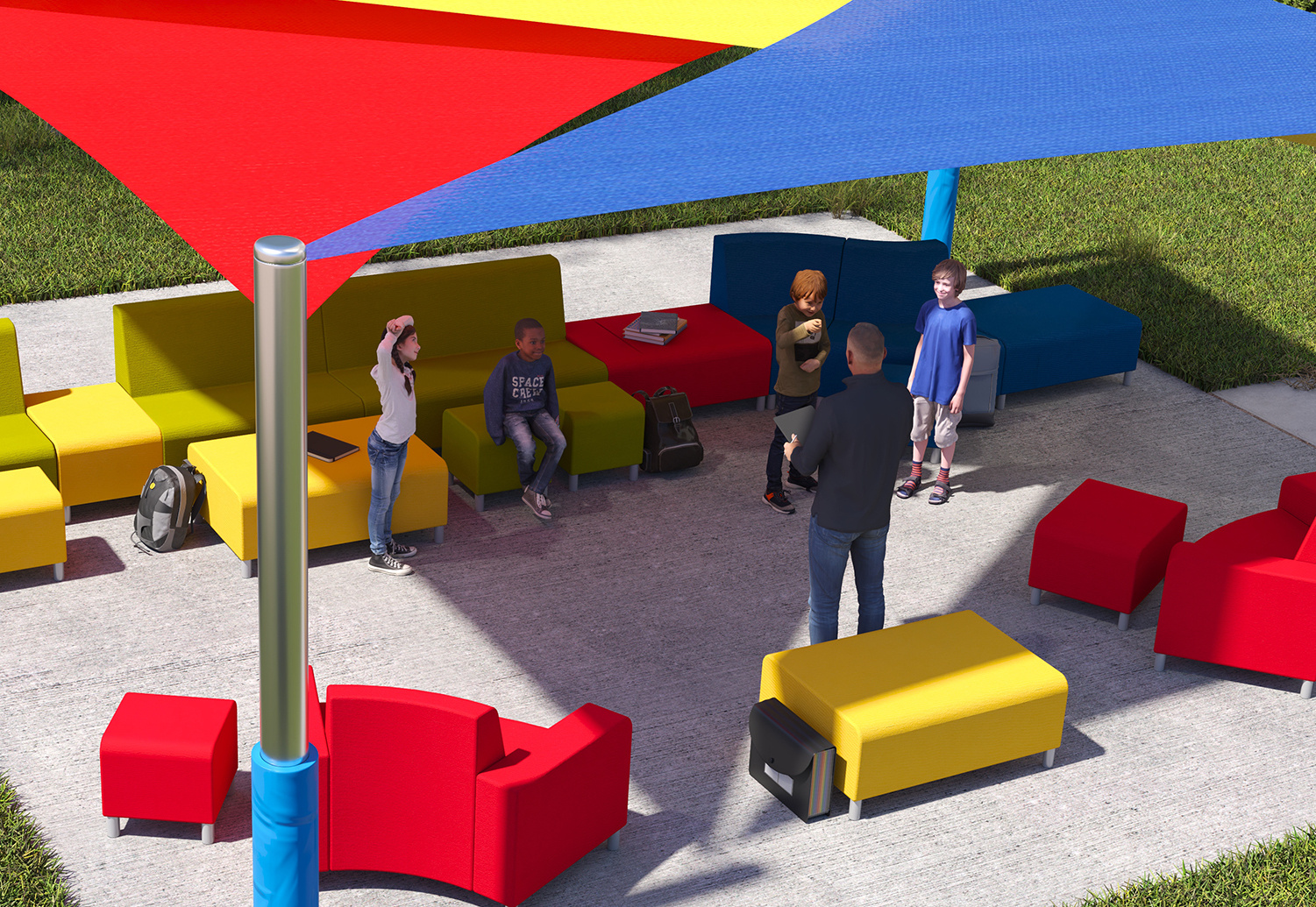
Weather-resistant, outdoor lounge seating such as [Beanies by MooreCo - Outdoor](https://www.moorecoinc.com/product/beanies-by-mooreco-outdoor/) can be shuffled and rearranged into groups, separated for quiet, alone time, or relocated entirely to create a classroom anywhere on campus grounds.
[](https://cta-redirect.hubspot.com/cta/redirect/5811835/274a9be4-e782-4493-9190-b6a15f0a9349)
## **Why Outdoor Learning Resonates Deeply with Generation Alpha**
**Combat Digital Fatigue and Enhance Focus**
[Read More](https://blog.moorecoinc.com/outdoor-learning-for-the-growth-and-development-of-generation-alpha)
Topics: [Design](https://blog.moorecoinc.com/topic/design), [Active Learning](https://blog.moorecoinc.com/topic/active-learning), [Active Classroom](https://blog.moorecoinc.com/topic/active-classroom), [Well-Being](https://blog.moorecoinc.com/topic/well-being), [Thrive](https://blog.moorecoinc.com/topic/thrive), [Mental Health](https://blog.moorecoinc.com/topic/mental-health), [generation z](https://blog.moorecoinc.com/topic/generation-z), [Sensory Needs](https://blog.moorecoinc.com/topic/sensory-needs), [Experiential Learning](https://blog.moorecoinc.com/topic/experiential-learning), [outdoor](https://blog.moorecoinc.com/topic/outdoor), [Gen Alpha](https://blog.moorecoinc.com/topic/gen-alpha)
## [Unlocking Learning for All: How Universal Design for Learning (UDL) and the Right Furniture Create Inclusive Classrooms](https://blog.moorecoinc.com/how-to-apply-universal-design-for-learning-into-your-classroom)
Posted by [MooreCo Inc](https://blog.moorecoinc.com/author/mooreco-inc) on Feb 21, 2025, 11:00:00 AM
- [Tweet](https://twitter.com/share)
[](https://blog.moorecoinc.com/how-to-apply-universal-design-for-learning-into-your-classroom)
# What is the Universal Design for Learning?
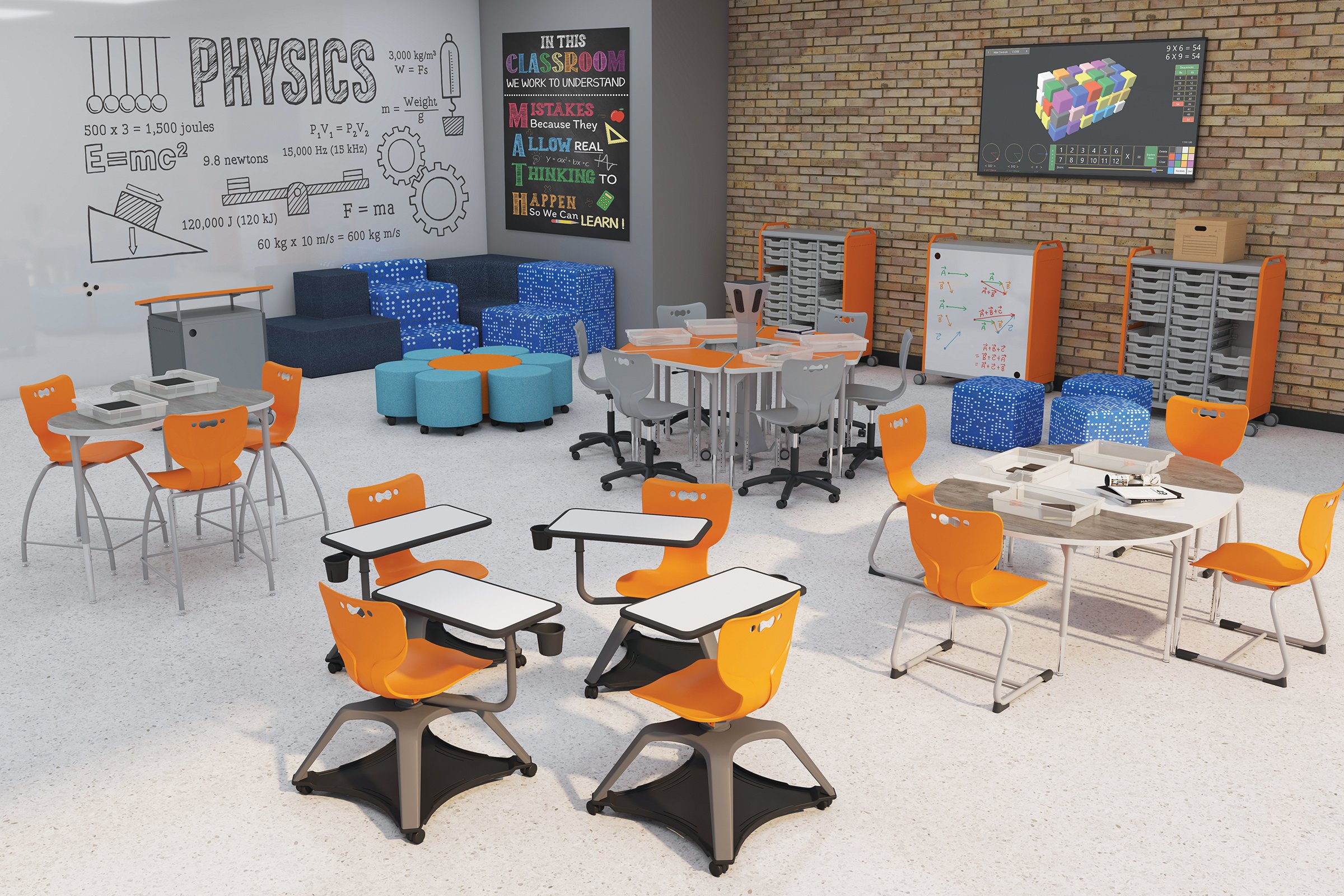
Universal Design for Learning (UDL) is an educational framework that guides the creation of flexible learning environments to accommodate the diverse needs of all students, no matter their ability. This framework was developed by neuropsychologist and educator, **[Dr. David H. Rose](https://www.cast.org/about/board/david-rose/),** and his colleagues at the [Center for Applied Special Technology (CAST)](https://www.cast.org/) in the late 1990s.
[Read More](https://blog.moorecoinc.com/how-to-apply-universal-design-for-learning-into-your-classroom)
Topics: [Design](https://blog.moorecoinc.com/topic/design), [Active Learning](https://blog.moorecoinc.com/topic/active-learning), [Human Development](https://blog.moorecoinc.com/topic/human-development), [Active Classroom](https://blog.moorecoinc.com/topic/active-classroom), [Diversity, Equity, and Inclusion](https://blog.moorecoinc.com/topic/diversity-equity-and-inclusion), [Thrive](https://blog.moorecoinc.com/topic/thrive), [Sensory Needs](https://blog.moorecoinc.com/topic/sensory-needs), [Learning Styles](https://blog.moorecoinc.com/topic/learning-styles), [Educators](https://blog.moorecoinc.com/topic/educators)
## [How is Foam Soft Seating for Schools Made?](https://blog.moorecoinc.com/how-is-foam-soft-seating-for-schools-made)
Posted by [MooreCo Inc](https://blog.moorecoinc.com/author/mooreco-inc) on Oct 16, 2024, 1:15:00 PM
- [Tweet](https://twitter.com/share)
[](https://blog.moorecoinc.com/how-is-foam-soft-seating-for-schools-made)
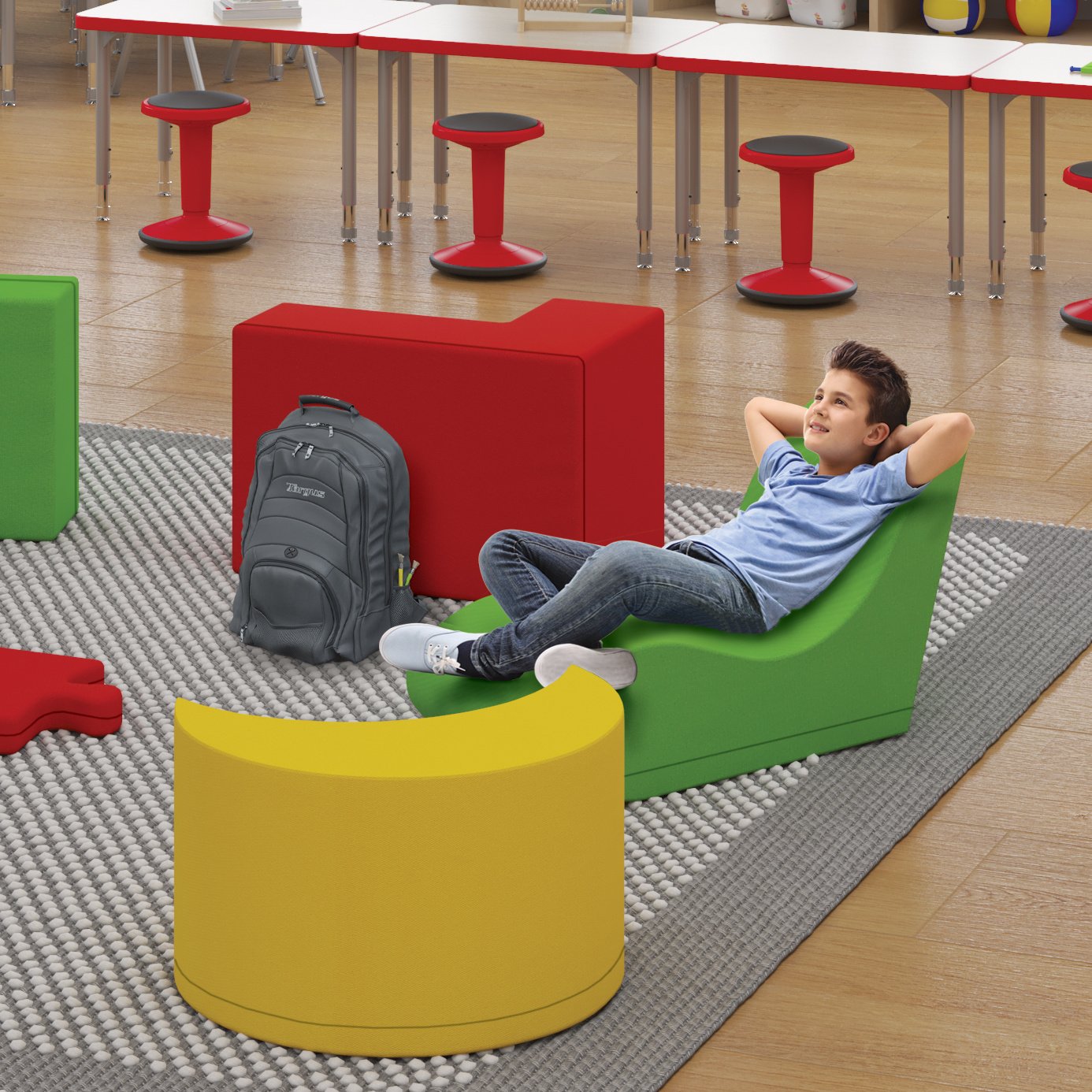
Ever wonder how soft seating is made? Soft seating is an essential tool for creating dynamic, diverse learning environments where students can Thrive. Read more about our [Thrive Philosophy](https://blog.moorecoinc.com/what-does-it-mean-to-thrive) and how it impacts our product designs.
[Read More](https://blog.moorecoinc.com/how-is-foam-soft-seating-for-schools-made)
Topics: [Design](https://blog.moorecoinc.com/topic/design), [Active Learning](https://blog.moorecoinc.com/topic/active-learning), [Human Development](https://blog.moorecoinc.com/topic/human-development), [Active Classroom](https://blog.moorecoinc.com/topic/active-classroom), [Back-To-School](https://blog.moorecoinc.com/topic/back-to-school), [Diversity, Equity, and Inclusion](https://blog.moorecoinc.com/topic/diversity-equity-and-inclusion), [Teacher's Favorites](https://blog.moorecoinc.com/topic/teachers-favorites), [New Products](https://blog.moorecoinc.com/topic/new-products), [Well-Being](https://blog.moorecoinc.com/topic/well-being), [Thrive](https://blog.moorecoinc.com/topic/thrive), [Mental Health](https://blog.moorecoinc.com/topic/mental-health), [Sensory Needs](https://blog.moorecoinc.com/topic/sensory-needs), [Special Education](https://blog.moorecoinc.com/topic/special-education), [Learning Styles](https://blog.moorecoinc.com/topic/learning-styles), [Media Centers](https://blog.moorecoinc.com/topic/media-centers), [foam seating](https://blog.moorecoinc.com/topic/foam-seating)
## [Why is Flexible Seating Beneficial to Students?](https://blog.moorecoinc.com/why-is-flexible-soft-seating-beneficial-for-students-classroms)
Posted by [MooreCo Inc](https://blog.moorecoinc.com/author/mooreco-inc) on Oct 9, 2024, 1:00:00 PM
- [Tweet](https://twitter.com/share)
[](https://blog.moorecoinc.com/why-is-flexible-soft-seating-beneficial-for-students-classroms)
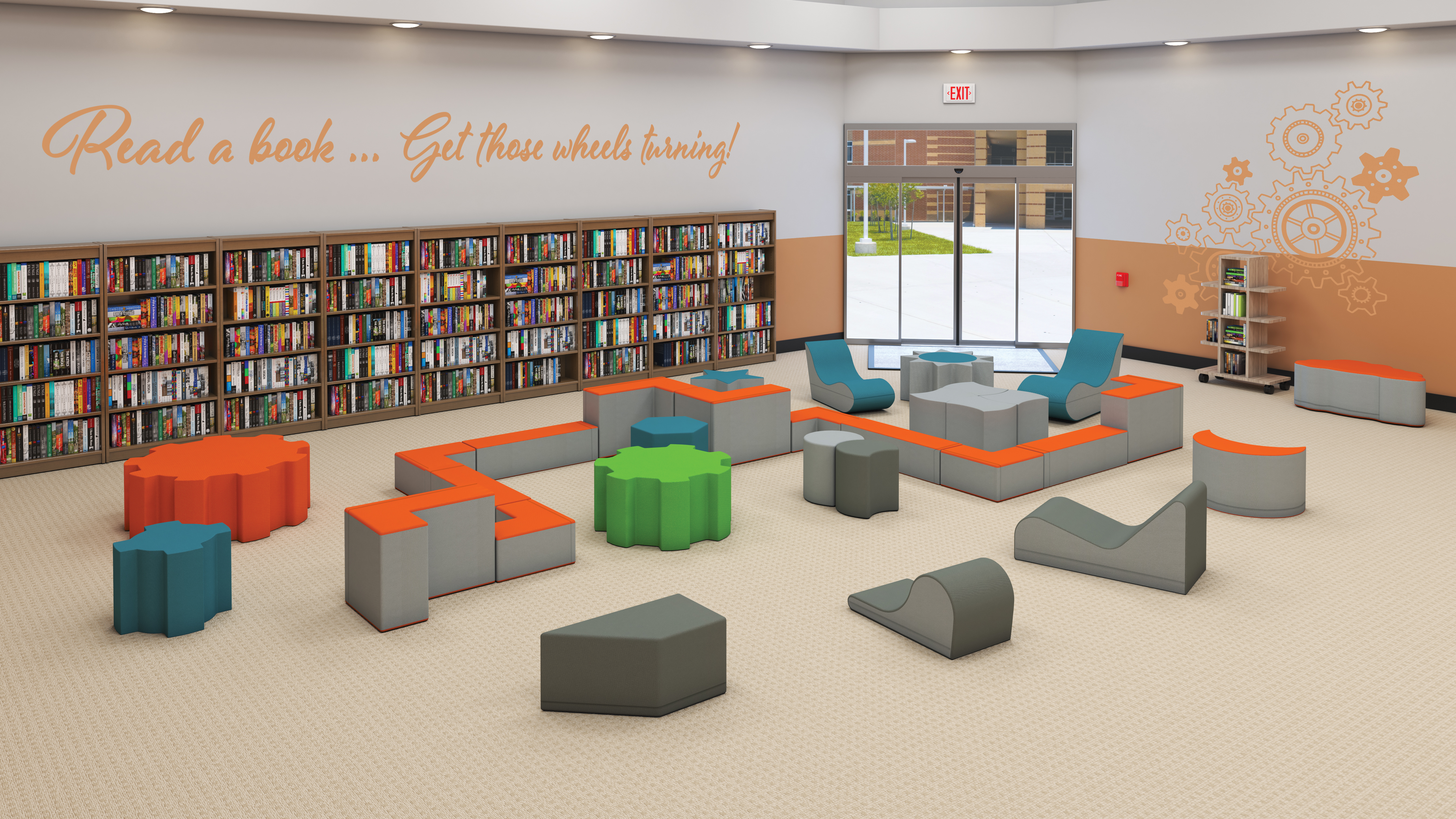
It's widely known that students benefit from schools swapping out desks with more comfortable seating arrangements. Adaptive, mobile, foam soft seating is the ultimate tool for creating a flexible, inclusive, active-learning environment. This blog breaks down some of the benefits that adaptable, moveable soft seating can provide for your students.
[Read More](https://blog.moorecoinc.com/why-is-flexible-soft-seating-beneficial-for-students-classroms)
Topics: [Design](https://blog.moorecoinc.com/topic/design), [Active Learning](https://blog.moorecoinc.com/topic/active-learning), [Human Development](https://blog.moorecoinc.com/topic/human-development), [Active Classroom](https://blog.moorecoinc.com/topic/active-classroom), [Back-To-School](https://blog.moorecoinc.com/topic/back-to-school), [Diversity, Equity, and Inclusion](https://blog.moorecoinc.com/topic/diversity-equity-and-inclusion), [Teacher's Favorites](https://blog.moorecoinc.com/topic/teachers-favorites), [New Products](https://blog.moorecoinc.com/topic/new-products), [Well-Being](https://blog.moorecoinc.com/topic/well-being), [Thrive](https://blog.moorecoinc.com/topic/thrive), [Mental Health](https://blog.moorecoinc.com/topic/mental-health), [Sensory Needs](https://blog.moorecoinc.com/topic/sensory-needs), [Special Education](https://blog.moorecoinc.com/topic/special-education), [Learning Styles](https://blog.moorecoinc.com/topic/learning-styles), [Media Centers](https://blog.moorecoinc.com/topic/media-centers), [foam seating](https://blog.moorecoinc.com/topic/foam-seating)
## [What Does Research Say About Flexible Seating in Schools?](https://blog.moorecoinc.com/what-does-research-say-about-flexible-seating-in-schools)
Posted by [MooreCo Inc](https://blog.moorecoinc.com/author/mooreco-inc) on Oct 2, 2024, 1:00:00 PM
- [Tweet](https://twitter.com/share)
[](https://blog.moorecoinc.com/what-does-research-say-about-flexible-seating-in-schools)
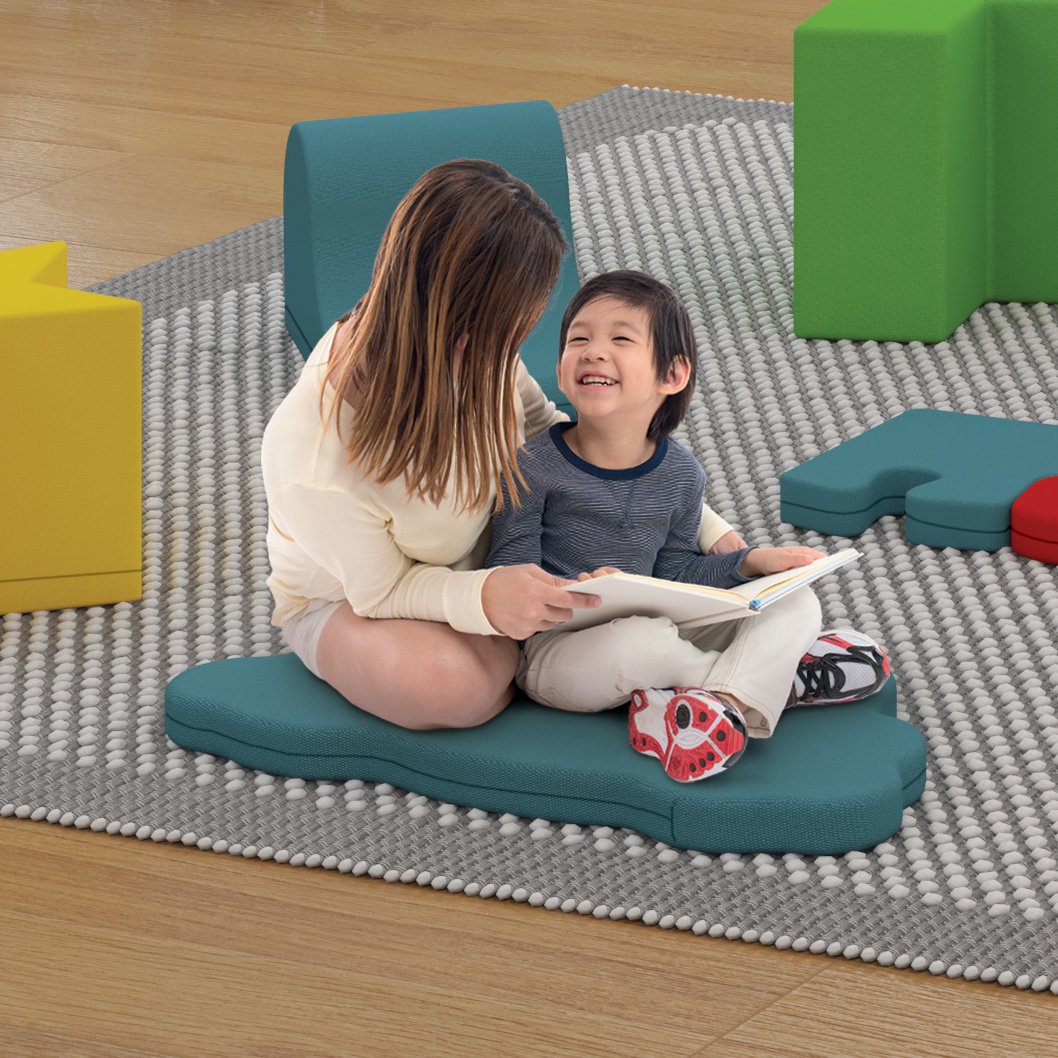
It's widely known that students benefit from schools swapping out desks with more comfortable seating arrangements. But what are the experts saying?
[Read More](https://blog.moorecoinc.com/what-does-research-say-about-flexible-seating-in-schools)
Topics: [Design](https://blog.moorecoinc.com/topic/design), [Active Learning](https://blog.moorecoinc.com/topic/active-learning), [Human Development](https://blog.moorecoinc.com/topic/human-development), [Active Classroom](https://blog.moorecoinc.com/topic/active-classroom), [Back-To-School](https://blog.moorecoinc.com/topic/back-to-school), [Diversity, Equity, and Inclusion](https://blog.moorecoinc.com/topic/diversity-equity-and-inclusion), [Teacher's Favorites](https://blog.moorecoinc.com/topic/teachers-favorites), [New Products](https://blog.moorecoinc.com/topic/new-products), [Well-Being](https://blog.moorecoinc.com/topic/well-being), [Thrive](https://blog.moorecoinc.com/topic/thrive), [Mental Health](https://blog.moorecoinc.com/topic/mental-health), [Sensory Needs](https://blog.moorecoinc.com/topic/sensory-needs), [Special Education](https://blog.moorecoinc.com/topic/special-education), [Learning Styles](https://blog.moorecoinc.com/topic/learning-styles), [Media Centers](https://blog.moorecoinc.com/topic/media-centers), [foam seating](https://blog.moorecoinc.com/topic/foam-seating)
## [Five Benefits of Lightweight, Foam Soft Seating in Educational Environments](https://blog.moorecoinc.com/five-benefits-of-lightweight-all-foam-soft-seating-for-educational-environments)
Posted by [MooreCo Inc](https://blog.moorecoinc.com/author/mooreco-inc) on Sep 25, 2024, 1:00:00 PM
- [Tweet](https://twitter.com/share)
[](https://blog.moorecoinc.com/five-benefits-of-lightweight-all-foam-soft-seating-for-educational-environments)
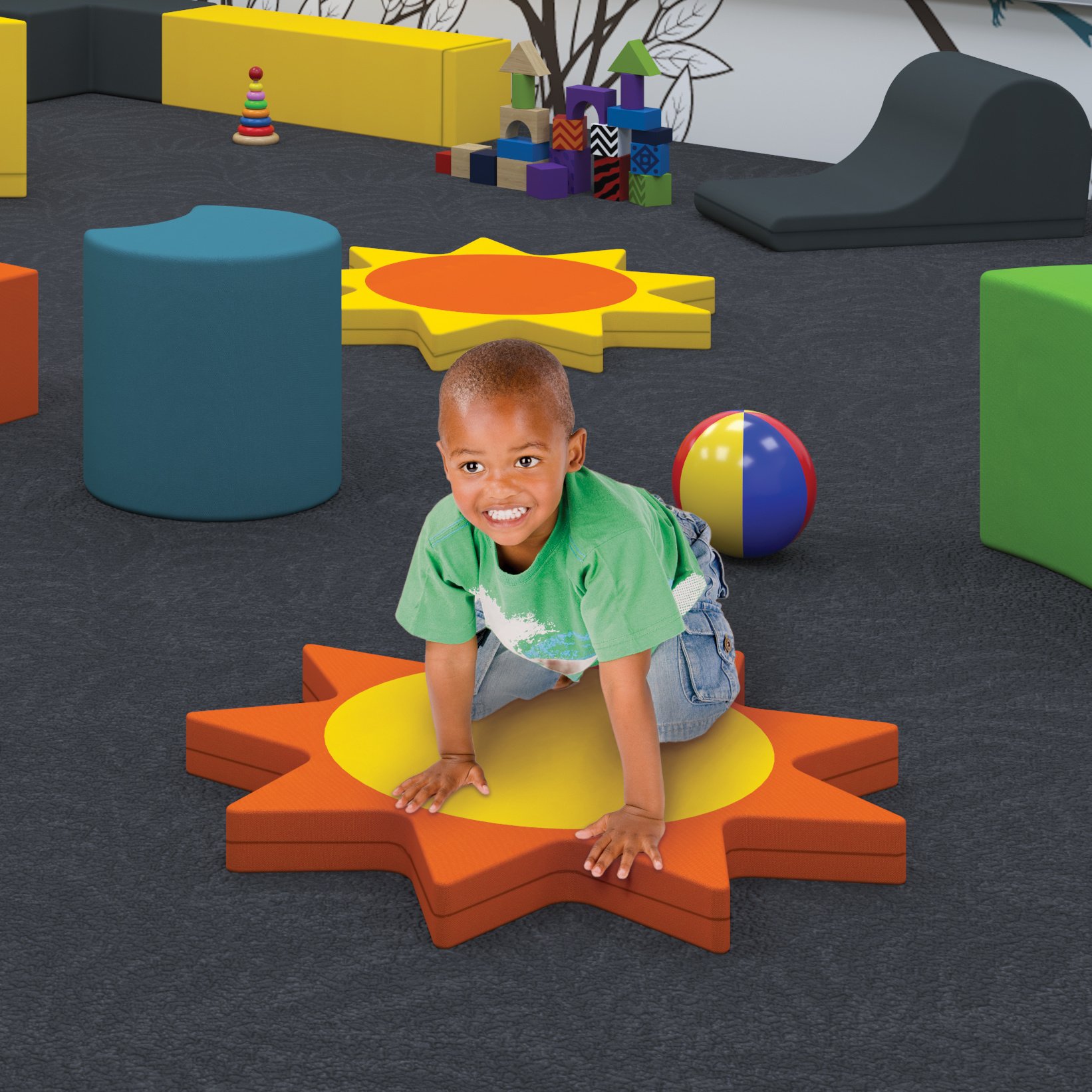
All foam soft seating is not just about comfort and playfulness, it’s about creating an environment that meets each student where they are developmentally and helps them discover their ideal position for learning. Students benefit from schools swapping out desks with more comfortable seating arrangements. Adaptive, mobile, foam soft seating is the ultimate tool for creating a flexible, inclusive, active-learning environment.
[Read More](https://blog.moorecoinc.com/five-benefits-of-lightweight-all-foam-soft-seating-for-educational-environments)
Topics: [Design](https://blog.moorecoinc.com/topic/design), [Active Learning](https://blog.moorecoinc.com/topic/active-learning), [Human Development](https://blog.moorecoinc.com/topic/human-development), [Active Classroom](https://blog.moorecoinc.com/topic/active-classroom), [Back-To-School](https://blog.moorecoinc.com/topic/back-to-school), [Diversity, Equity, and Inclusion](https://blog.moorecoinc.com/topic/diversity-equity-and-inclusion), [Teacher's Favorites](https://blog.moorecoinc.com/topic/teachers-favorites), [New Products](https://blog.moorecoinc.com/topic/new-products), [Well-Being](https://blog.moorecoinc.com/topic/well-being), [Thrive](https://blog.moorecoinc.com/topic/thrive), [Mental Health](https://blog.moorecoinc.com/topic/mental-health), [Sensory Needs](https://blog.moorecoinc.com/topic/sensory-needs), [Special Education](https://blog.moorecoinc.com/topic/special-education), [Learning Styles](https://blog.moorecoinc.com/topic/learning-styles), [Media Centers](https://blog.moorecoinc.com/topic/media-centers), [foam seating](https://blog.moorecoinc.com/topic/foam-seating)
## [Three Foam Soft Seating Options to Enhance Student Collaboration](https://blog.moorecoinc.com/all-foam-soft-seating-enhance-student-collaboration)
Posted by [MooreCo Inc](https://blog.moorecoinc.com/author/mooreco-inc) on Sep 18, 2024, 1:00:00 PM
- [Tweet](https://twitter.com/share)
[](https://blog.moorecoinc.com/all-foam-soft-seating-enhance-student-collaboration)
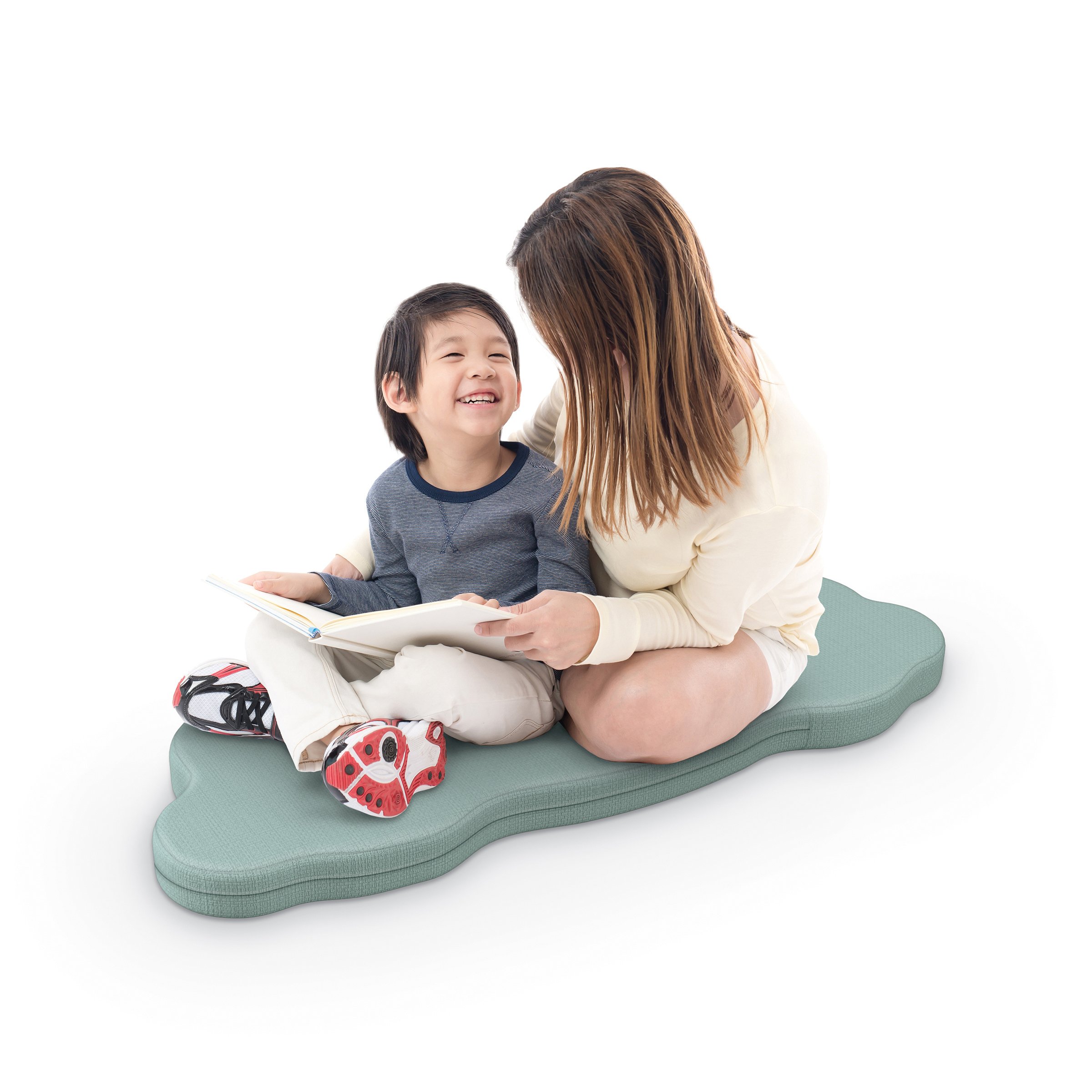
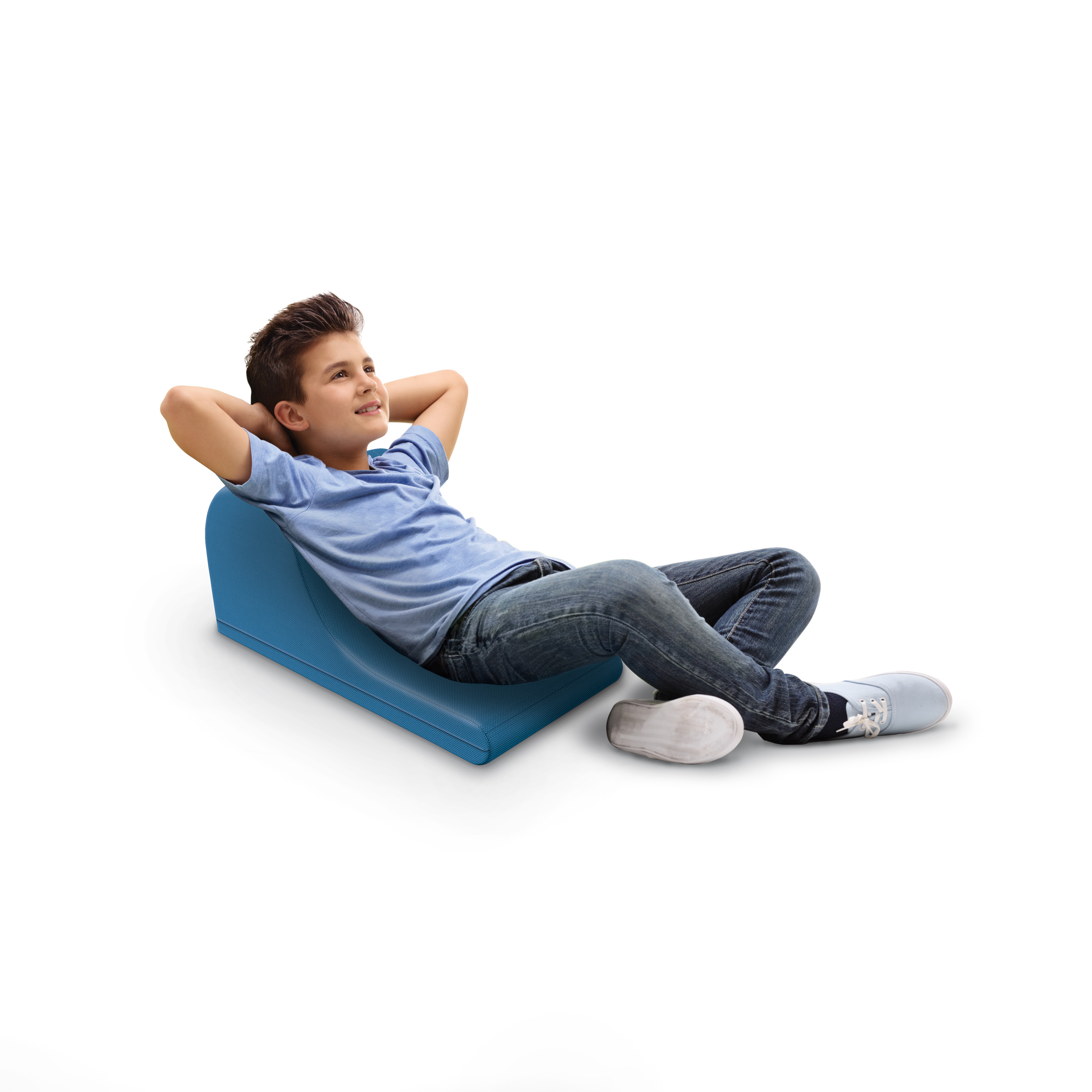
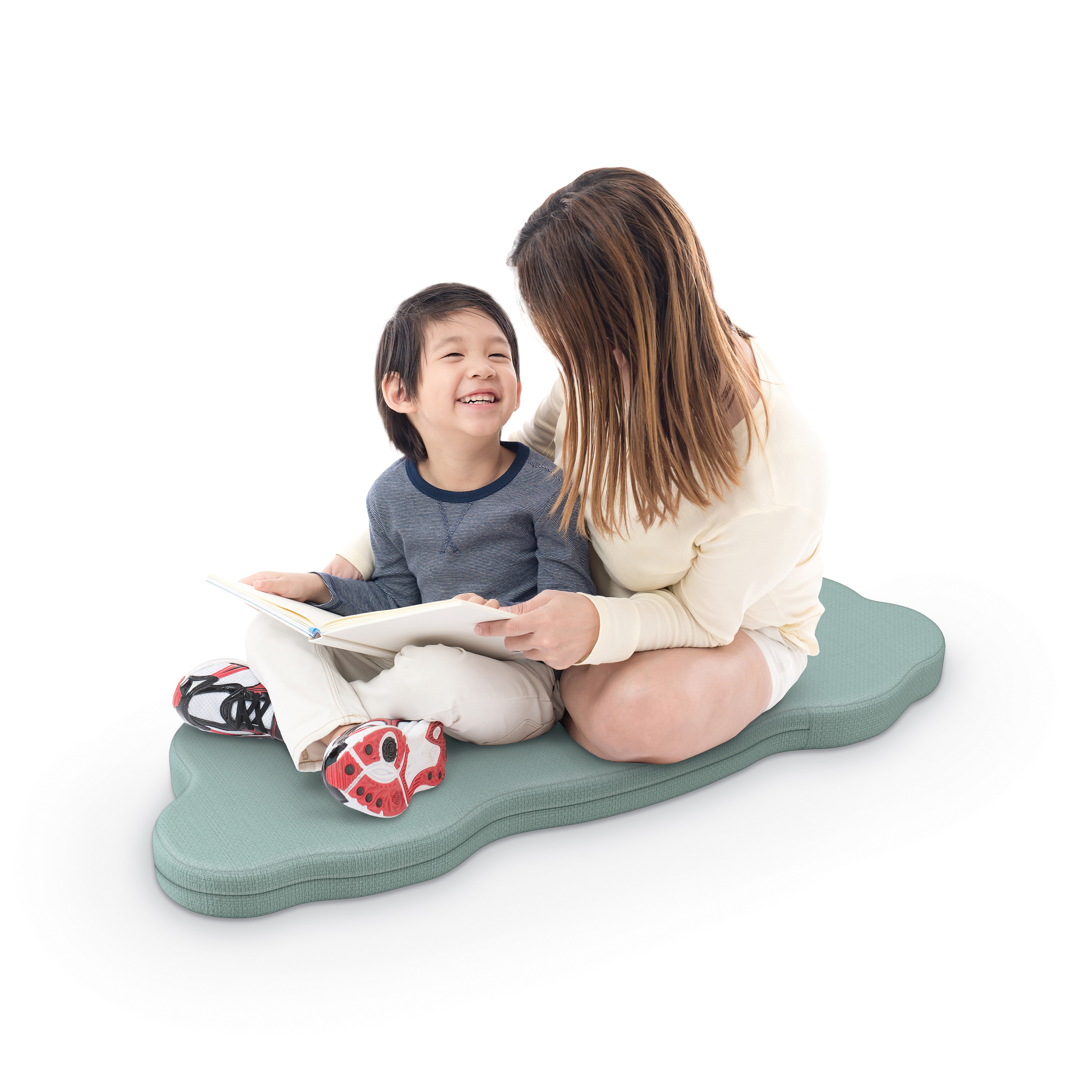
[MooreCo's three new lines of lightweight, durable, All Foam Soft Seating](https://www.moorecoinc.com/all-foam-soft-seating/) encourages choice and fosters autonomy, allowing students and teachers to create personal spaces or collaborative breakout spaces. Students become agents in their learning and begin to place value on their physical, mental, and emotional well-being. Let MooreCo help you meet the needs of your students with flexible seating!
- 
Click to enlarge.
- 
Click to enlarge.
- 
Click to enlarge.
[Read More](https://blog.moorecoinc.com/all-foam-soft-seating-enhance-student-collaboration)
Topics: [Design](https://blog.moorecoinc.com/topic/design), [Active Learning](https://blog.moorecoinc.com/topic/active-learning), [Human Development](https://blog.moorecoinc.com/topic/human-development), [Active Classroom](https://blog.moorecoinc.com/topic/active-classroom), [Back-To-School](https://blog.moorecoinc.com/topic/back-to-school), [Diversity, Equity, and Inclusion](https://blog.moorecoinc.com/topic/diversity-equity-and-inclusion), [Teacher's Favorites](https://blog.moorecoinc.com/topic/teachers-favorites), [New Products](https://blog.moorecoinc.com/topic/new-products), [Well-Being](https://blog.moorecoinc.com/topic/well-being), [Thrive](https://blog.moorecoinc.com/topic/thrive), [Mental Health](https://blog.moorecoinc.com/topic/mental-health), [Sensory Needs](https://blog.moorecoinc.com/topic/sensory-needs), [Special Education](https://blog.moorecoinc.com/topic/special-education), [Learning Styles](https://blog.moorecoinc.com/topic/learning-styles), [Media Centers](https://blog.moorecoinc.com/topic/media-centers), [foam seating](https://blog.moorecoinc.com/topic/foam-seating)
[All posts](https://blog.moorecoinc.com/all) [Next](https://blog.moorecoinc.com/page/2)
## About Us
Welcome to Thrive, a blog by MooreCo! We are designers and manufacturers of quality commercial and educational furniture and visual communication products. Our blog features industry related discussions, insight, resources, trends, and case studies. To learn more about our product offerings, please visit our website at [www.moorecoinc.com](https://www.moorecoinc.com).
### Subscribe to Email Updates
### Recent posts
### Posts by Topic
- [Design (56)](https://blog.moorecoinc.com/tag/design)
- [Thrive (56)](https://blog.moorecoinc.com/tag/thrive)
- [Active Learning (53)](https://blog.moorecoinc.com/tag/active-learning)
- [Human Development (53)](https://blog.moorecoinc.com/tag/human-development)
- [Active Classroom (52)](https://blog.moorecoinc.com/tag/active-classroom)
- [Educators (43)](https://blog.moorecoinc.com/tag/educators)
- [Collaboration (42)](https://blog.moorecoinc.com/tag/collaboration)
- [Technology (33)](https://blog.moorecoinc.com/tag/technology)
- [Learning Styles (32)](https://blog.moorecoinc.com/tag/learning-styles)
- [Well-Being (31)](https://blog.moorecoinc.com/tag/well-being)
- [Back-To-School (29)](https://blog.moorecoinc.com/tag/back-to-school)
- [Diversity, Equity, and Inclusion (27)](https://blog.moorecoinc.com/tag/diversity-equity-and-inclusion)
- [Covid-19 (26)](https://blog.moorecoinc.com/tag/covid-19)
- [Teacher's Favorites (24)](https://blog.moorecoinc.com/tag/teachers-favorites)
- [Experiential Learning (23)](https://blog.moorecoinc.com/tag/experiential-learning)
- [Hybrid Classroom (19)](https://blog.moorecoinc.com/tag/hybrid-classroom)
- [Designer's Corner (17)](https://blog.moorecoinc.com/tag/designers-corner)
- [CTE (16)](https://blog.moorecoinc.com/tag/cte)
- [generation z (16)](https://blog.moorecoinc.com/tag/generation-z)
- [Sensory Needs (15)](https://blog.moorecoinc.com/tag/sensory-needs)
- [Compass (14)](https://blog.moorecoinc.com/tag/compass)
- [Mental Health (14)](https://blog.moorecoinc.com/tag/mental-health)
- [New Products (14)](https://blog.moorecoinc.com/tag/new-products)
- [remote (12)](https://blog.moorecoinc.com/tag/remote)
- [Insider (11)](https://blog.moorecoinc.com/tag/insider)
- [Learning From Home (11)](https://blog.moorecoinc.com/tag/learning-from-home)
- [Case Studies (10)](https://blog.moorecoinc.com/tag/case-studies)
- [Media Centers (10)](https://blog.moorecoinc.com/tag/media-centers)
- [Working from Home (10)](https://blog.moorecoinc.com/tag/working-from-home)
- [Special Education (9)](https://blog.moorecoinc.com/tag/special-education)
- [Learn from Home (8)](https://blog.moorecoinc.com/tag/learn-from-home)
- [MooreCo Workplace (8)](https://blog.moorecoinc.com/tag/mooreco-workplace)
- [foam seating (8)](https://blog.moorecoinc.com/tag/foam-seating)
- [Clean Living (7)](https://blog.moorecoinc.com/tag/clean-living)
- [Color (7)](https://blog.moorecoinc.com/tag/color)
- [Higher Education (7)](https://blog.moorecoinc.com/tag/higher-education)
- [Ergonomics (6)](https://blog.moorecoinc.com/tag/ergonomics)
- [Healthcare (6)](https://blog.moorecoinc.com/tag/healthcare)
- [hybrid (6)](https://blog.moorecoinc.com/tag/hybrid)
- [i3sixty (6)](https://blog.moorecoinc.com/tag/i3sixty)
- [Expert Analysis (4)](https://blog.moorecoinc.com/tag/expert-analysis)
- [quick ship (4)](https://blog.moorecoinc.com/tag/quick-ship)
- [outdoor (3)](https://blog.moorecoinc.com/tag/outdoor)
- [Affordability (2)](https://blog.moorecoinc.com/tag/affordability)
- [Akt (2)](https://blog.moorecoinc.com/tag/akt)
- [Gen Alpha (2)](https://blog.moorecoinc.com/tag/gen-alpha)
- [Coradle (1)](https://blog.moorecoinc.com/tag/coradle)
- [Pediatric (1)](https://blog.moorecoinc.com/tag/pediatric)
- [Visual Communications (1)](https://blog.moorecoinc.com/tag/visual-communications)
- [Whiteboard (1)](https://blog.moorecoinc.com/tag/whiteboard)
- [holiday (1)](https://blog.moorecoinc.com/tag/holiday)
- [intergenerational classroom (1)](https://blog.moorecoinc.com/tag/intergenerational-classroom)
see all
Search the blog
- There are no suggestions because the search field is empty.
### Where are we?
2885 Lorraine Ave
Temple, TX 76501
### Contact us
Tel : [800.749.2258](tel:+18007492258)
Fax : 866.888.7483
Email: [info@moorecoinc.com](mailto:info@moorecoinc.com)
© 2026 MooreCo.