

At the end of 2020, MooreCo published a list of lessons we'd learned from the year — things we believed would matter going forward. Looking back from 2026, most of those instincts were right. But the framing was narrow: we were writing about surviving a crisis, not about what the crisis had revealed.
What the pandemic actually did was run a five-year stress test on nearly every assumption embedded in how schools operate. Which assumptions held? Which broke under pressure? What did schools that navigated the disruption best have in common?
These are the ten lessons that have proven most durable. Not lessons about surviving the pandemic, but lessons the pandemic forced us to learn about how schools should work — for students, for teachers, and for the communities they serve. Many of these were understood in theory before 2020. The pandemic made them impossible to ignore.
The 10 Lessons
1. Adaptability is an institutional capability, not a personality trait
The schools that navigated the pandemic best were not the ones with the most optimistic teachers — they were the ones with the most adaptable systems. Adaptability at the institutional level means having physical environments that can be reconfigured quickly, technology infrastructure that works reliably across attendance modes, and organizational norms that treat change as a manageable constant rather than an emergency.
A Brookings Institution analysis of schools' pandemic responses found that institutions with flexible learning environments — both physical and organizational — recovered academic ground faster and sustained higher student engagement during disruptions than those with rigid, fixed systems. The lesson is structural: adaptability has to be designed in, not improvised.
What designing for institutional adaptability looks like:
- Physical environments where furniture can be reconfigured in minutes — not hours — by teachers and students themselves
- Technology infrastructure that supports multiple attendance and delivery modes simultaneously, not as an emergency workaround
- Instructional frameworks (like the cohort model or station rotation) that have built-in flexibility rather than assuming a single daily format
For a detailed look at the physical design changes that most directly support adaptability, see our companion post: 7 ways the pandemic permanently changed classroom design.
2. Teacher well-being directly determines student outcomes — and can't be treated as secondary
Before 2020, teacher well-being was a moral concern but rarely a strategic priority. The pandemic made the connection between teacher condition and student outcomes impossible to miss. When teachers burned out — and they did, at rates the profession had never previously seen — classrooms deteriorated in ways that no curriculum reform could fix. A RAND Corporation study found that by 2022, teacher burnout rates were nearly double those of the general working population, with direct links to increased absenteeism, reduced instructional quality, and accelerating attrition.
The schools that have made lasting progress on teacher retention since the pandemic are those that addressed it as a design problem, not just a morale problem. The physical environment of a school signals — through every room teachers occupy — whether the institution values them as whole people or only as instructional delivery mechanisms.
Design interventions that directly support teacher well-being and retention:
- A teachers' lounge designed as a genuine restorative space — comfortable, organized, and visually distinct from the work environment
- Teacher workstations that support mobility and organization, reducing the physical overhead of daily instruction
- Classroom layouts that reduce teacher fatigue — open sightlines, easy circulation, and ergonomic considerations for adults who spend seven hours a day on their feet
For specific design guidance, see our post on 6 teachers' lounge design ideas that boost morale and well-being.
3. Student mental health is a curriculum priority, not a counseling add-on
Before 2020, most schools addressed student mental health through specialized staff and targeted interventions. The pandemic revealed that this model was inadequate at scale. When the mental health needs of an entire student population are elevated simultaneously — as they were during and after the pandemic — reactive, individual-focused approaches are overwhelmed. A 2023 CDC report on adolescent mental health documented that rates of persistent sadness among high school students hit a record high of 42% in 2021, affecting students across all demographics and school types.
The schools that responded most effectively did so at the systemic level: integrating social-emotional learning into daily instruction, redesigning physical environments to actively support self-regulation, and training teachers to recognize and respond to mental health signals as a standard teaching competency. CASEL's research consistently shows that schools with embedded SEL practices — not just SEL programs — show measurable improvements in both academic performance and student mental health indicators.
Physical design elements that support student mental health at the classroom level:
- Dedicated quiet zones within each classroom — not requiring a student to leave the room to decompress — with soft seating, reduced visual stimulation, and calming color
- Biophilic elements: plants, natural light, and organic materials that have documented cortisol-reducing effects
- Flexible seating that gives students physical agency — the ability to choose where and how they sit — which research links directly to reduced anxiety and improved self-regulation
For the developmental framework behind these design choices, see our post on the 6 stages of human development that inspire design strategies.
4. Equity is a design problem, not only a policy problem
The pandemic exposed the inequity embedded in educational design with unusual clarity. When remote learning became mandatory, the McKinsey & Company research on learning loss documented that students from lower-income households fell further behind not just because of device and internet access gaps, but because the physical and social infrastructure of school — meals, therapies, social interaction, adult supervision — had been providing equity benefits that no one had fully accounted for until it was removed.
The implications for school design are direct. Equity isn't only about curriculum access — it's about whether the physical environment serves all students equally. A classroom with only one type of seating, one type of lighting, one mode of instruction, and no accommodation for different sensory and physical needs is a classroom that works well for some students and poorly for others, by design.
Design principles for more equitable classroom environments:
- Multiple seating options at every grade level — not as a premium feature but as a baseline — so students who learn better in motion, with back support, or in low-stimulation environments are accommodated within the regular classroom
- Acoustic management: students with auditory processing differences, hearing loss, or sensory sensitivities are disproportionately harmed by poor classroom acoustics
- Distributed technology access with charging infrastructure built in — so that device access is equally available to all students regardless of home resources
For a focused look at design for diverse learning needs, see our post on how to create an ADHD-friendly classroom.
5. The physical environment of school is a public health asset
Before 2020, school buildings were evaluated primarily as educational environments. The pandemic added a public health lens that has permanently expanded the criteria for what makes a school building good. Air quality, surface materials, lighting, and spatial density are now understood to affect not just learning outcomes but the physical health of the people inside them.
The design changes with the most lasting public health value — the ones that schools have retained not as COVID measures but as permanent improvements — are those that were good for learning outcomes independent of any health rationale:
- Non-porous, easy-clean surfaces — porcelain steel desktops and table tops are easier to sanitize than wood or fabric, resist bacteria growth, and happen to also be excellent writing surfaces. The public health case and the educational case point in the same direction.
- Improved ventilation and air quality — schools that upgraded HVAC and air filtration systems during the pandemic have reported benefits including reduced student respiratory illness, lower absenteeism, and in some cases improved cognitive performance — all consistent with the existing research on indoor air quality and learning.
- Reduced classroom density — the pandemic-era practice of spacing students further apart turned out to align with flexible classroom design principles: more space per student supports more varied activities, better movement, and reduced distraction. Schools that maintained lower density configurations have retained them for instructional reasons.
6. Small, consistent learning communities are better for most students than large, anonymous class groups
The cohort structures adopted for safety reasons during the pandemic inadvertently reproduced conditions that educational research had been documenting as beneficial for decades. Small, consistent learning communities — where students know each other well, have shared history, and feel accountable to each other — produce stronger academic and social-emotional outcomes than large, rotating class groups.
The Learning Policy Institute's research on teacher retention also notes that teachers working in schools organized around consistent small learning communities report significantly higher job satisfaction and lower burnout — because the relational depth of small-group teaching is one of the most rewarding aspects of the profession, and one that large-group formats systematically undermine.
The physical classroom design that supports small learning communities:
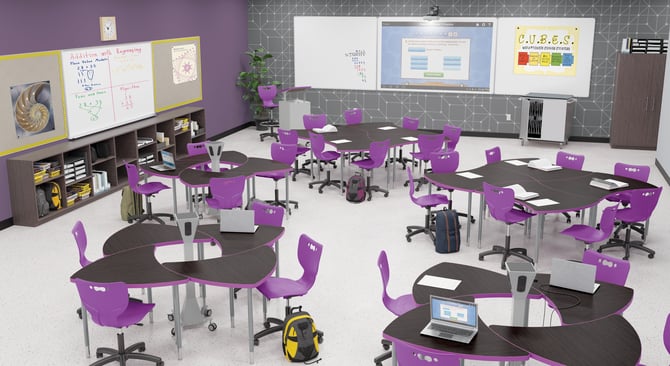
- Pod tables as the default layout — consistent group clusters that become a home base rather than a temporary grouping
- Zone identity for each cohort — visual cues that reinforce group membership and belonging
- Per-group shared surfaces for collaborative thinking and documentation
For a complete implementation guide, see our post on the classroom cohort model: benefits, design, and how to get started.
7. In-person school serves functions that no remote alternative can replicate
The pandemic generated an enormous natural experiment in remote learning — and the results were, on balance, a strong argument for the irreplaceable value of physical school. McKinsey's research on pandemic learning loss documented significant academic regression across most student populations during extended remote learning periods, with the sharpest declines among students who were already furthest behind.
But the lesson isn't simply that in-person school is better than remote school. It's that in-person school provides a specific bundle of goods — structured social interaction, access to adults outside the family, physical activity, meals, therapies, and the developmental stimulus of a peer community — that remote formats cannot replicate. The lesson for school design is to make physical school as good as it can be at providing those goods, rather than trying to replicate the passive-consumption model of screen-based learning.
What designing for the irreplaceable value of in-person school looks like:
- Prioritize the social and collaborative formats that remote learning does worst — group discussion, hands-on projects, physical movement, peer-to-peer teaching
- Design for the full developmental spectrum, not just academic content delivery — spaces that support physical development, social-emotional growth, and creative exploration alongside cognitive learning
- Treat the physical environment as the infrastructure for all of the above — flexible furniture, varied zones, and writable surfaces are the physical substrate that makes all of these activities possible
8. Technology is infrastructure, not innovation
One of the most clarifying realizations of the pandemic era was that technology in schools works best when it's invisible — when it's reliable, accessible, and integrated enough that it doesn't require special knowledge or effort to use. Schools that had treated technology as an innovation showcase found themselves struggling; schools that had treated it as basic infrastructure performed better.
The lesson: stop thinking about educational technology as a differentiator and start thinking about it the way you think about plumbing — as something that needs to work reliably, all the time, for everyone, without drama. The innovations that matter are those that make instruction more flexible and teachers more effective, not those that demonstrate technological sophistication for its own sake.
What treating technology as infrastructure means in practice:
- Reliable high-bandwidth WiFi throughout every classroom and common area, treated as non-negotiable — before devices, before displays, before anything else
- Power access built into furniture and walls so that device charging is never a constraint on use
- Permanent AV installation (wall-mounted displays, ceiling microphones, room cameras) rather than portable setups that require daily deployment and introduce reliability problems
- An LMS that all students, teachers, and families can access, where all materials and communication live consistently
9. Preparedness is a design discipline, not an emergency response
Before 2020, most schools had emergency plans for fires, severe weather, and lockdowns. Almost none had plans for extended instructional disruption. The pandemic revealed that preparedness for the kinds of disruptions most likely to affect schools — illness, weather, family emergencies, community events — is not an emergency management problem but a design problem.
Schools that were prepared for instructional disruption didn't become prepared by having a crisis plan. They became prepared by designing their normal operating environment to be flexible enough that disruption was manageable rather than catastrophic. The curriculum, the technology, the physical space, and the teacher's instructional practice all needed to support multiple modes — not as contingencies, but as standard features.
Designing for preparedness:
- Hybrid-capable classrooms as the default — so that a switch to remote or reduced-attendance instruction requires no new setup, just a change of mode
- LMS-based course management where all materials are always digitally accessible — so that a student absent for a week doesn't face a paperwork avalanche upon return
- Flexible furniture that supports multiple simultaneous configurations — so that a classroom serving 12 students one day and 24 the next doesn't require a furniture overhaul
10. Community connection is a measurable school design outcome
Perhaps the most unexpected lesson of the pandemic was how viscerally students, teachers, and families felt the loss of physical school community. When schools closed, it wasn't just instruction that disappeared — it was the daily experience of belonging to something larger than home. The RAND Corporation research on student belonging documents belonging as one of the strongest individual-level predictors of academic resilience, persistence, and long-term school success.
What the pandemic revealed is that belonging is not an accidental byproduct of putting students in the same building. It is something that has to be actively designed for — in the way spaces invite or discourage connection, in the instructional structures that create or prevent relationships, and in the physical environment's signals about whether the people inside are valued.
Designing for community and belonging:
- Common spaces that invite informal gathering — hallways, common areas, and transition spaces designed for spontaneous interaction rather than efficient traffic flow
- Classroom layouts that make students visible to each other — pod and circular arrangements where students see their peers' faces, not the backs of their heads
- Physical cues of care and investment: plants, art, quality furniture, and visual order that signal the institution has thought about the people who occupy the space
- Spaces where student work is displayed and celebrated — making the classroom a reflection of its community, not just a container for instruction
What These Lessons Point Toward
Read together, these ten lessons describe a consistent direction for school design: away from environments optimized for passive content delivery, toward environments designed for the full range of what in-person school is uniquely able to provide.
The physical environment is not the only lever for making these shifts — instructional practice, organizational culture, and policy all matter. But the physical environment is the one that affects every student and teacher, every day, from the moment they walk in the door. A classroom that is designed well for how people actually learn is one of the highest-leverage investments a school can make.
MooreCo has spent over 35 years working to understand and serve that design challenge. For a closer look at the physical design changes most directly supported by these lessons, see our companion post: 7 ways the pandemic permanently changed classroom design.
Design Environments Where Every Student Thrives
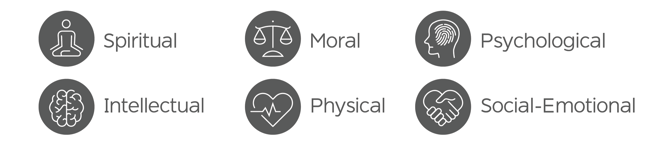
MooreCo's Thrive Philosophy is built on the belief that physical environments either support or suppress the people inside them — and that designing well for human development is the foundation of everything else. Our furniture and visual communication products are built around that principle.
Explore our full catalog at moorecoinc.com, or contact our design team to discuss how your school's physical environment can better serve the lessons learned.
Topics: Collaboration, Design, Active Learning, Human Development, Active Classroom, Covid-19, Learning From Home, Hybrid Classroom, Well-Being, Thrive, Mental Health, Learning Styles, Educators